Why AI-Built Websites Underperform: They Repeat a Ten-Year DIY Failure at Scale
AI-built websites underperform because they repeat a problem that is ten years old, only faster, at larger scale, and with less control left in your hands. AI-generated websites often look the same or perform poorly because they rely on vague prompts and common design trends. We have had template website design for almost ten years now. Wix, then Shopify, now AI builders. Each step traded control for access. The output looks finished, but it is averaged from the same web everything else was built on, so it cannot be personalised, cannot carry a brand, and costs you money every month it runs.
That is the short answer. What follows is the long one: why it happens, what it actually costs, what a developer knows that the output does not include, and where AI genuinely is the right call.
AI did not start this. It is the newest point on a ten-year curve.
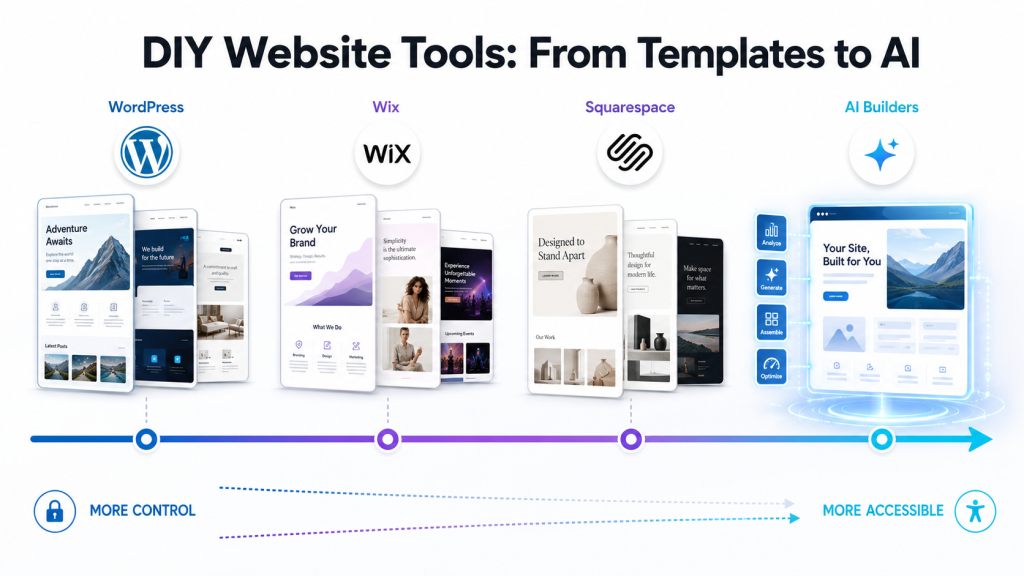
Do-it-yourself websites are not new. We have watched them for over a decade. Templates first. Then Wix and Squarespace. Then Shopify. Every one of them arrived with the same promise: you do not need a professional web designer for the code, the layout or the UX, you can do this yourself.
The problem here is trading accessibility for control. Yes, in some instances, for very basic websites, it can work if you have a good idea of what you are doing. But there are always limitations with these platforms.
A template gave you less control than a custom build, so the question then becomes: how do you create a website for your audience that does not look like every other Shopify or Wix template? How do you know where to place your CTAs, or whether your code is scalable and efficient?
With a template you could still move things around and see how it was assembled. Wix gave you less again, and locked more of the structure away. AI gives you the most access and the least control of all: a finished website you did not fully design, sitting on a foundation you never saw, which means you cannot properly diagnose it or fix it when it stops working.
Now look at the failure modes people are noticing on AI-built sites. Sameness. Weak search performance. Sites that look done but do not convert. Copy that could belong to anyone. None of that is new. All of it was present in the template era and the Wix era. We tested it then. We test it now.
Many clients who approach New Perspective Design about an underperforming website, whether the problem is ranking on Google or conversions, are on Shopify, WordPress.com and Wix builds. The platforms have, over the years, tried to fix this problem by providing more SEO tools and more layout templates, but that still does not really fix the core issue: you are not a web designer, you do not know code or SEO, and now AEO. Yes, some DIY builders press on and try to learn the landscape, and that is great, we are all for learning. Unfortunately, in this industry, having been in it for ten years, we know that nothing stays the same. UI and UX workflows that work today may not work in three months, and that is even more true of SEO and now AEO. It is something you need to spend every day reading and studying. That is why it is, and always will be, a profession despite AI.
AI did not invent these problems. It industrialised them.
There is a second thing worth being honest about here, because it is the part most agency articles get wrong. These platforms did not kill web design agencies. They expanded the market. More businesses got online cheaply, learnt what a website can and cannot do, and a good number of them later went looking for something better. The pattern runs like this:
- A new tool makes website creation accessible.
- Adoption rises sharply.
- Outputs start looking and sounding the same.
- Having a website stops being a competitive advantage.
- Businesses start asking how to outperform their competitors rather than simply exist alongside them.
Access, then adoption, then sameness, then competition, then the search for differentiation. AI is running that same sequence, at a far larger scale and much faster than Wix ever did.
The mechanism: averaged from a web that is frequently wrong
Here is the part most people miss entirely. AI website builders fail for the same reason AI writing fails. It is one root cause, not two.
AI writing draws its patterns from a decade of web content. A large amount of that content is noise, and a meaningful portion of it is simply incorrect. Anyone who has worked in SEO for any length of time knows this.
When we first started out ten years ago, we learnt from articles and forums, and we very quickly realised that most content on the web, which is the same training data now building your site, is driven by a few very problematic things.
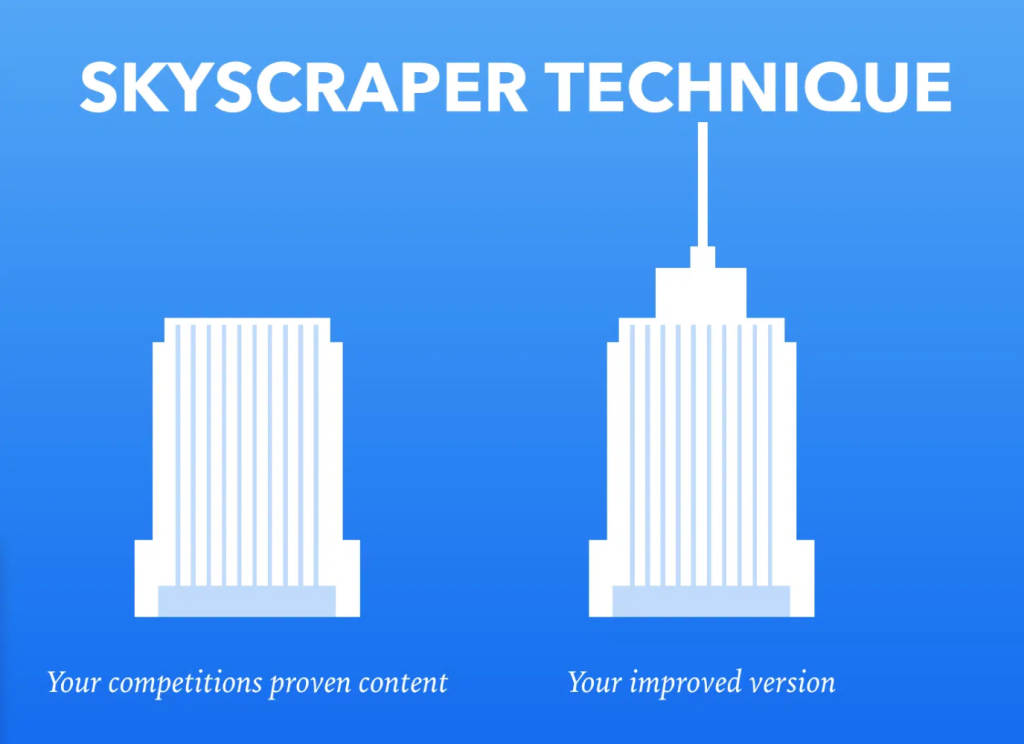
The first is a technique we used to call skyscrapering. If something ranked well on Google, you would take that article, keep its core, and rewrite it with more information, which gave you a good chance of outranking it. The problem is that nobody ever stopped to ask whether the original article was actually right. So you end up with a great deal of content born from the skyscraper technique that is simply wrong, repeated and expanded on for years.
The second is commercially driven content. Look at articles from Semrush, Search Engine Journal and Search Engine Land. If you follow them for a week you will very quickly see the contradictions. Schema is important, buy our schema tool, or our affiliate’s schema tool. Then a week later schema is not really important, it is actually consensus across the web, buy our consensus tool, or our affiliate’s consensus tracking tool.
The web is full of outdated advice, copied claims, commercially biased recommendations, and conclusions published without any controlled testing behind them. We know because we test things rather than assume them, and a good deal of accepted wisdom does not survive the test.
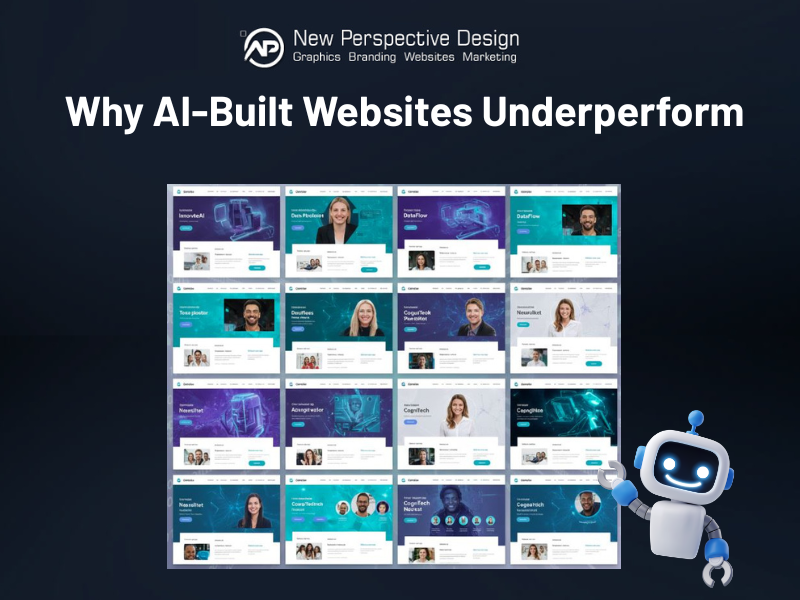
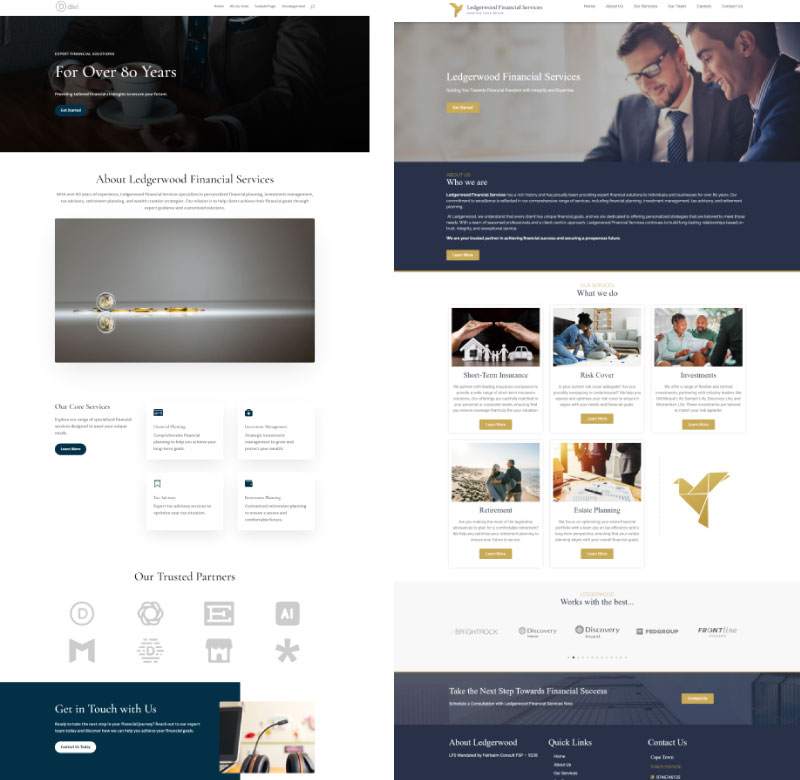
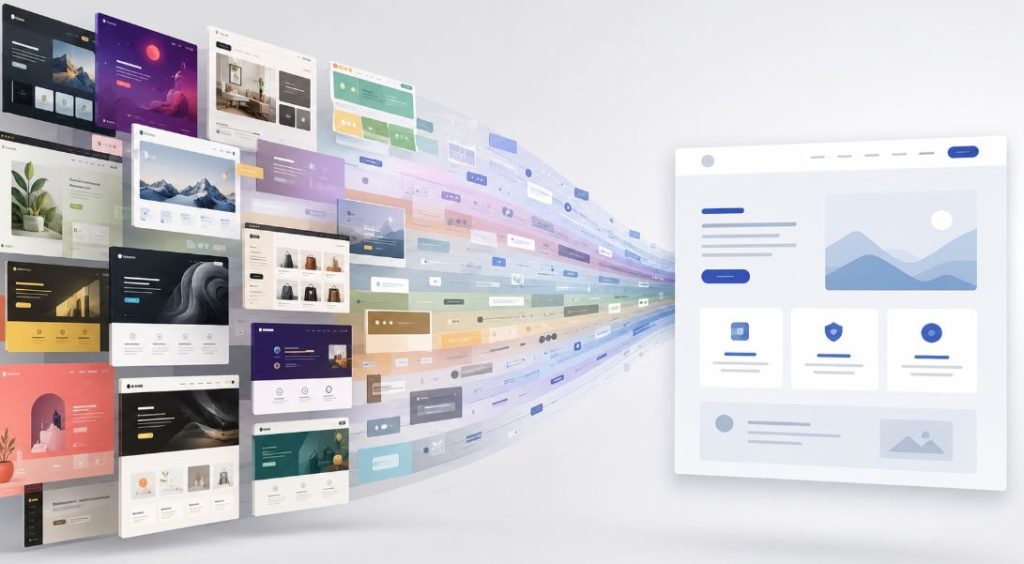
AI site builders use that as their dataset: the hundreds of ThemeForest templates that no designer would even touch, the skyscraper articles, the commercially driven articles. That is what your website design and your website copy are based on. The same layout conventions. The same navigation habits. The same section order, the same hero, the same three-card services row, the same look and feel, all scraped from the same web. The design regresses to a generic mean in exactly the way the copy does.
Averaged design is nobody’s design in particular. That single line is the root of almost everything else on this page.
It is worth separating two things that get conflated. AI has real capability. What it does not have is judgment. Producing a website does not mean the tool understood:
- your customer’s buying process
- your brand’s position in its market
- the relationship between your advertising, your landing pages and your conversions
- technical SEO and crawlability
- analytics and attribution
- performance, accessibility and long-term maintainability
- when accepted best practice happens to be wrong for your particular business
The output can be competent and still be aimed at nothing.
Averaged design cannot be personalised, and that is a brand and conversion problem
People treat “all AI sites look the same” as a cosmetic complaint. It is not. It runs straight through user experience, brand identity and revenue, and those three are not separate concerns. They are the same concern seen from different angles.
A website should be built around how a specific buyer makes a specific decision. The layout, the content hierarchy, the imagery, the tone, the navigation, the flow from first glance to enquiry, all of it chosen for one audience. A moving company and a Quraan academy have completely different buyers making completely different decisions under completely different pressures. They should not share a skeleton. AI-built sites routinely do.
When the design is averaged, three things follow, and they compound each other.
Your brand becomes invisible. Brand identity is differentiation made visible. If your look and feel is the statistical average of the web, you are indistinguishable from every competitor who used the same tool. You are not building recognition. You are borrowing someone else’s.
The page cannot resonate. Conversion depends on a visitor feeling that the page was built for them and understands their situation. Averaged design cannot do that, because it was assembled for no one in particular. There is no one to resonate with.
It cannot be personalised afterwards. You cannot retrofit audience-specific design onto a structure that was never built with an audience in mind. You end up decorating an average instead of designing for a buyer.
Then the copy does the same thing on top of it. Generic writing on generic layout, aimed at a generic reader. Two averaged layers reinforcing each other.
And here is the thing. SEO hates average. AEO hates average. Most importantly, users hate average.
Doing X without knowing why X
This is the gap that matters, and it is widening rather than closing.
AI makes execution cheap. Anyone can now produce a website, an advert, a logo, a content calendar. What AI does not supply is the foundation underneath the execution. So people implement without understanding the fundamentals, and that produces a specific and predictable failure:
You do X because the tool told you to do X. You do not know why X. So when X stops working, you have no idea why it stopped working, and no way to work out what to do instead.
That is a different problem from not knowing things. It is not knowing whether the thing you were handed is right. You cannot judge whether the output solves the correct business problem, whether the approach chosen was the sensible one, whether the technical setup underneath it is sound, what you should be measuring after launch, or whether the advice you followed was evidence-based or just repeated internet consensus with confidence attached.
The honest counter-argument is that most business owners do not want knowledge. They want the job done. That is entirely fair. Nobody is buying expertise for its own sake.
The problem is that the job cannot be done at its best without the knowledge. The knowledge is not the product. The knowledge is what allows anyone to diagnose, validate and improve the product after it is live, which is where a website actually earns its money.
What a developer knows that the output does not include
There is a layer of any website you never see from the outside, and an AI build does not hand it over with the files.
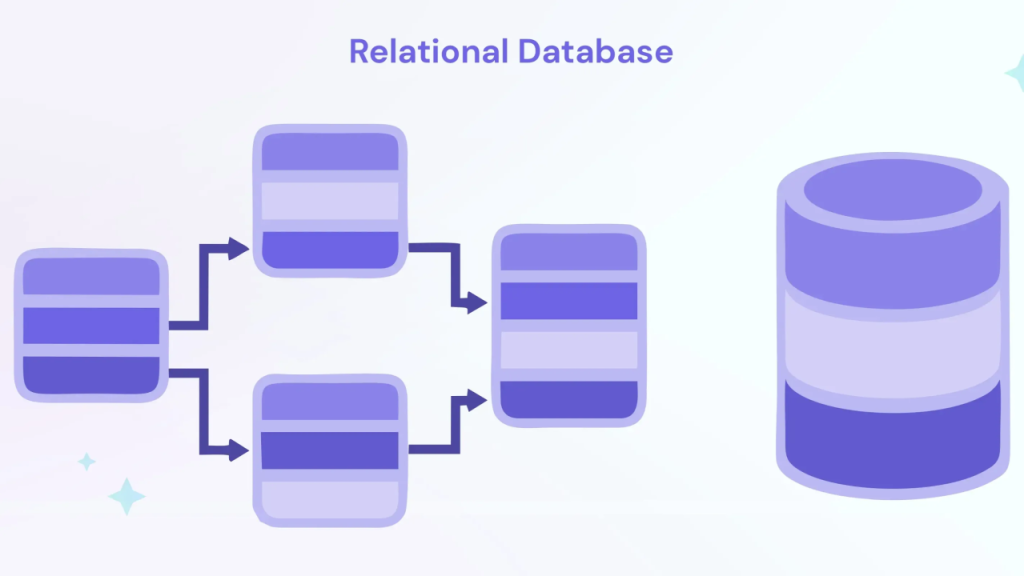
A web developer carries structural knowledge. If you want to perform a function on data, you go to the database schema and read the keys: which table holds the primary key, which holds the foreign key, how the relation between those tables is actually built, and what happens to everything downstream when you change one of them. None of that is visible on the front end. All of it decides whether the thing works.
I could get AI to write me accounting software and test it within a few days. Would I do it? No. Should an accountant do it? Probably not. Should an accountant hire a software developer and combine their knowledge? Probably yes.
The same applies to diagnosis. When something breaks, an experienced developer generally knows where to look first, because they have seen that class of failure before. That is not intelligence. It is pattern recognition earned by fixing things.
And it applies to reading code. Looking at a build, you can see which patterns are going to become a problem in six months and which will hold. You can see what will scale and what quietly will not, long before the business hits the wall.
A non-developer has none of this, and the AI-built site does not include it. You receive the artefact without the understanding of why it is built the way it is. So you cannot diagnose it, cannot extend it safely, and cannot tell whether it will survive growth.
This matters more with AI, not less, because of a specific limitation. AI cannot hold an entire system in its head. As a build grows past what fits in its context, it loses the thread. It forgets decisions it made earlier in the same project. It starts producing pieces that do not agree with each other, and it does so confidently. The larger the build gets, the more the structural integrity degrades, which is exactly the point at which scalability starts to matter to the business.
You cannot see any of this happening. From the front, the site still looks finished.
Looks like a multi-page site, crawls as one page
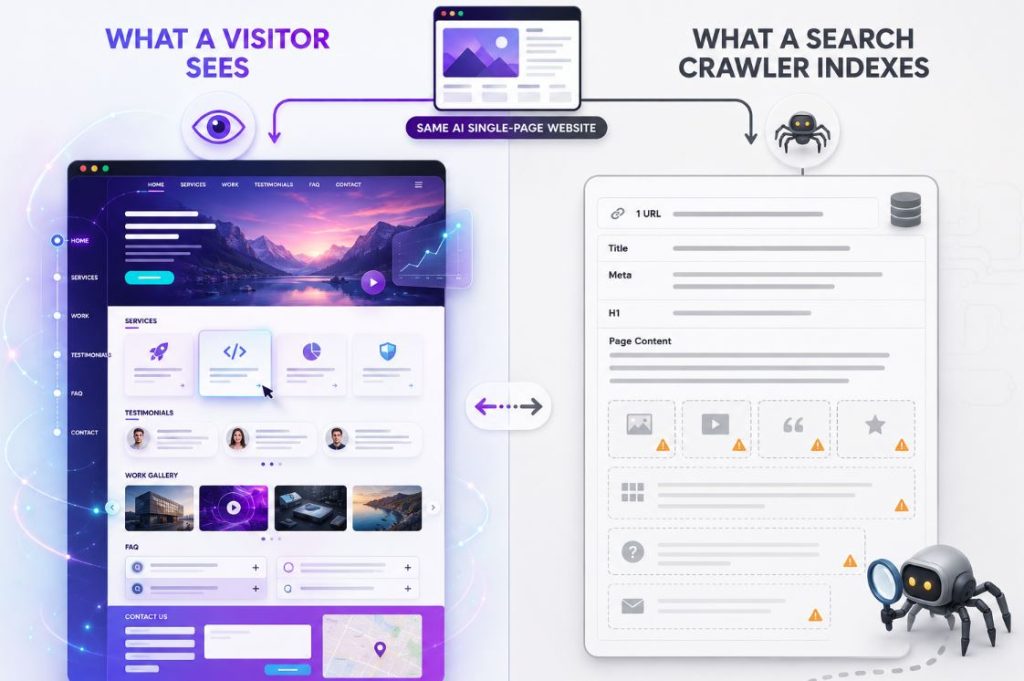
The clearest illustration of all of this is technical, and it is extremely common right now.
Many AI tools output a single-page build. Everything lives on one URL, styled with a utility framework such as Tailwind, with the different “pages” hidden and then swapped in by JavaScript when a visitor clicks the navigation. To a visitor it looks like a five-page website with an About page, a Services page and a Contact page. Structurally it is one page pretending to be five.
Let us be accurate about the search consequence, because there is a lazy version of this argument doing the rounds. Google does render JavaScript. The old claim that crawlers cannot see JS content at all is out of date. An experiment run by Vercel with MERJ, analysing over 100,000 Googlebot fetches, confirmed that Google renders client-side JavaScript and attempts to render HTML pages universally rather than a selected subset. Source: vercel.com/blog/how-google-handles-javascript-throughout-the-indexing-process
The real risk is narrower and more practical. Rendering is a separate, queued, resource-heavy step. When it is delayed, blocked or times out, the crawler indexes what was in the initial HTML response, which on a single-page build can be close to nothing.
Even when rendering works perfectly, the structure imposes a hard ceiling:
- You cannot target different keywords on different pages when there is only one page and one URL. Every service you offer is competing for the same single entry in the index.
- You lose the ability to specialise. A dedicated page for each service, each location and each audience is one of the most reliable structural advantages in SEO, and a single-page build gives it up entirely.
- Content that only appears after a click may never be rendered, indexed or trusted.
- Users lose clear navigation. Navigation is not decoration. It signals structure and priority to people and to search engines at the same time.
- AI search assistants parse rendered HTML too, so the same hidden content is invisible in that discovery layer as well.
This is one example. It is a good one because you can see it from the outside if you know what to look for, and because the person who published the site has no idea it is happening.
A business website is not a one-off cost. It is a compounding loss.
This is where a design argument becomes a business one, and it is the part that most owners underestimate.
When you rely on your website for revenue, a bad one does not cost you once. It bills you continuously.
- Every day it does not rank is revenue you never see, and you will never know what it was.
- Every visitor who leaves because your site looks identical to three competitors is a customer who had no reason to choose you.
- Every enquiry killed by confusing UX is a lead that was already interested.
- Every visitor lost to generic writing is someone who could not tell what makes you different, because the page did not say.
Then it compounds. Put an advertising budget behind that site and you are paying to pour traffic into a leaking page. Advertising does not fix a weak website. It multiplies whatever the website already does, in both directions. A poor conversion rate on paid traffic converts your marketing budget into a faster loss.
Compound it again over six months and the real damage finally surfaces. Half a year has passed and you have not built any brand identity into your own assets. No recognition. No accumulated trust. No distinct position in your market. Nothing that a future customer would remember.
And that is the thing people are actually buying. Not a page. An asset that appreciates.
Where AI genuinely is the right call
This is not an argument against AI. We use it daily, and an article claiming AI cannot build websites would be both wrong and easy to disprove.
AI is a sensible choice when you need to validate an idea quickly, stand up a temporary placeholder, publish a genuinely simple brochure site, or learn how the pieces fit together before spending money. Many businesses stay on DIY platforms permanently and function perfectly well. That is a legitimate outcome, not a failure.
It becomes a risky choice the moment the site has to rank, convert, scale, integrate with your business systems, or carry a brand you intend to build on. That is the same question businesses asked about Wix. The stakes are simply higher now, because AI produces something that looks far more finished than a Wix template ever did.
The deciding factor is not the tool. It is whether the person driving it has the foundation to catch what the tool leaves out. And that foundation is domain-specific. It does not transfer.
AI can give me detailed instructions for rewiring my house. Would I do it? No. Not because the instructions are useless, but because I am not an electrician and I would not know what I was missing. AI can give me instructions for building financial software. Should I? No. Should an accountant? They understand money far better than I do, and they would still build poor software, because understanding finance is not the same as understanding software architecture. Should a developer? Probably, at least on the software side.
Competence does not carry across domains. Being excellent at running your business does not make you competent to build the thing that sells your business. That is not a comment on anyone’s intelligence. It is the same reason experienced developers stay out of the distribution board.
Where AI is genuinely changing things, including for us
A caveat worth stating plainly, because pretending otherwise would be dishonest.
AI will replace some development work. Not all of it, but some, and anyone claiming otherwise is guessing. There is also a feedback loop that most commentary misses: every time AI ships a feature that makes something easier, developers immediately start pushing at its limits, building on top of it and finding what it cannot yet do. That exploration is a large part of what shapes the next generation of AI features. The people best placed to find the boundary are the ones who understand what sits behind it.
What is actually happening is a shift in where value sits. As AI reduces the value of routine production, value moves towards strategy, integration, verification, accountability and experienced judgment. That is a defensible position. “AI can never do this” is not.
It is also worth being honest that an agency is not the only answer. When businesses outgrow DIY tools, they take one of four paths. Some hire an agency. Many, in our experience the largest group, hire internal staff. Some use freelancers. A small number genuinely learn the disciplines themselves, and that group is smallest because properly learning SEO, development, design and marketing takes years, and it is ongoing.
AI is available to all four. It makes an internal marketer more productive, a freelancer more versatile and an agency more efficient. It does not remove the choice. The real question was never AI versus agencies. It is where a business chooses to get expertise from, and what that expertise is actually worth once it is there.
We are not going to pretend an agency wins that comparison every time. An internal hire can understand one business more deeply and respond faster. A strong specialist freelancer can be exceptional. What an agency offers is combined expertise across design, development and marketing without building an entire department, systems and processes that already exist, pattern recognition from having seen similar problems across many businesses and industries, and no dependency on one person.
The questions people are actually searching
These are real questions people type into Google once their AI-built site is live and something feels wrong. They are worth answering directly, because the answers sit underneath everything above.
Why is my AI website HTML?
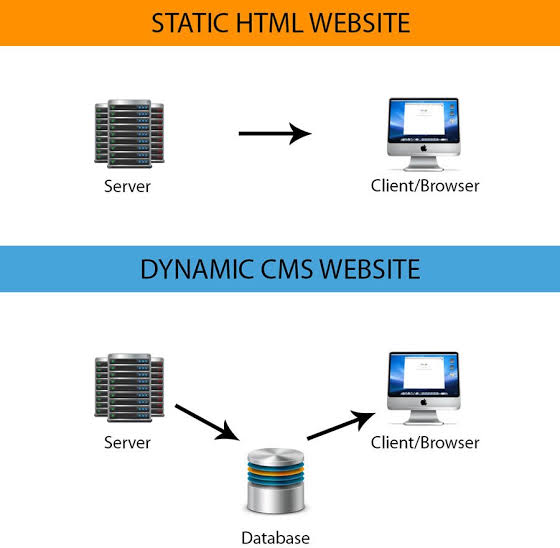
Because most AI website builders generate static front-end code, not a website system. You get HTML, CSS and JavaScript in a folder. There is no content management system behind it, no database, no admin area to log into. What you were handed is the front of a website with nothing behind it.
That has consequences you only discover later:
- You cannot edit your own content without opening the code.
- There is no structured content model, so no reusable templates for services, locations or blog posts.
- There is no plugin layer for schema, redirects, forms, caching or security.
- There are no user roles, so no safe way for a staff member to update anything.
- Hosting, deployment, backups and updates are now your problem.
- Adding a blog, a booking system or a shop later usually means starting again.
To be fair to static HTML, it is not inherently bad. A well-built static site can be fast and secure, and there are good reasons to choose one. The problem is unintentional static. You did not choose it, you inherited it, and you do not have the setup around it to run it.
Why is my AI website generic and robotic?
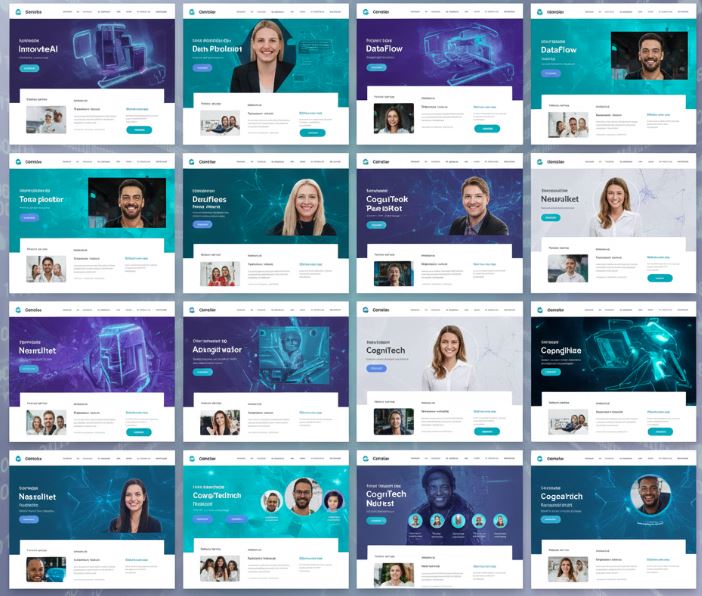
Because it was averaged, in both the design and the writing, from the same web. The layout came from thousands of near-identical templates. The copy came from a decade of content that largely repeats itself. Average in, average out.
The robotic feeling in the writing has a specific cause: there is no first-hand experience in it. No real numbers. No client situation. No opinion anyone could disagree with. Nothing that could only be written by someone who has actually done the work. It hedges instead of stating. It leans on the same handful of transition words. Every sentence runs to roughly the same length. It describes a category of business rather than your business.
The design does the same thing in a different medium. Hero, three cards, testimonial strip, call to action. That order is the tell.
How do I get my website to stop looking AI generated?
You change the specific things AI averages out. Not the tool, the inputs and the judgment applied to them.
- Replace stock and AI imagery with real photographs of your team, your premises, your work and your products.
- Write from first-hand experience. Real figures, real client situations, things only your business knows.
- Break the default section order. If your page runs hero, three cards, testimonials, CTA, so does everyone else’s.
- Choose typography and colour on purpose, tied to your brand, not from the default palette.
- Vary your sentence lengths. Cut the hedging and the stock transitions.
- Give the site a real structure. A page per service, per location, per audience, each with its own job.
- Say at least one thing a competitor could not copy and paste onto their own site.
Here is the part we enjoyed. Search any of these three questions and read the answers you get back. Almost all of the useful ones are written by designers and developers who use AI every day. That is the entire argument sitting in the search results. The tool was never the problem. The judgment applied to it is what separates a site that works from a site that merely looks finished.
What you are actually buying
A DIY or AI build hands you a disposable artefact. It looks done on the day it is published and it stops appreciating immediately, because there is nothing distinct inside it to compound. Every month it runs, it does the same amount of nothing.
A properly built website is an asset. Branding, build and marketing designed as one thing, tested rather than assumed, and getting stronger every month it runs. That is the difference between a website that looks finished and a website that works.
If your current site was built fast and you are not certain whether it is doing its job, that is exactly the thing worth checking. Most of the problems described on this page are invisible from the front end, which is precisely why they persist.