

Professional Email Setup & Migration for East London
From setting up professional domain-based email on Microsoft 365 or Google Workspace to migrating from POP3, IMAP, Exchange or a previous provider, New Perspective Design handles business email setup and migration for small and medium businesses in East London and across South Africa. Correctly configured from day one, with full email history preserved and no downtime during the transition.

Welcome to New Perspective Design – South Africa’s Foremost Web Design Expert
When creating this web design page dedicated to our website design services in South Africa, we thought: what can we, as a website design company, write on this page that will be most helpful to our clients and users in general?
And so, we came to our first point to address: education.
Educating clients on website design is integrally important. After all, they need to know what they are buying—whether it is a website design package, a standard brochure website, or an e-commerce online store website. Educating clients on the different websites available to them, their pros and cons, and how to manage their website has always been a part of our process when working with clients.
What is a website?
A website is a collection of web pages hosted on a server and accessible through the internet, typically via a domain name. It can serve many purposes—sharing information, selling products, offering services, or providing entertainment. Websites can be static (showing fixed information) or dynamic (interactive and regularly updated). In today’s world, a website is often the main point of contact between a business and its audience.
Is a website important for business in South Africa?

The numbers would say yes:
Approximately 237,400 websites in South Africa are currently powered by WordPress
As of 2025, there are approximately 18,626 live Shopify stores in South Africa
Having a website isn’t just a nice extra anymore—it’s essential. When someone hears about your business, the first thing they’ll do is look you up online. And what they find really counts. If your site feels outdated, takes forever to load, or isn’t mobile-friendly, you might be losing potential customers without even realizing it.
A well-designed site builds trust with visitors. On the flip side, a poorly designed one can send leads running away. It really is that straightforward.
If your website frustrates users, they’ll just click away. If they can’t quickly find what they’re after, they’ll go elsewhere. And if it looks shady or cheap, they won’t reach out to you. That can hit your bottom line, whether you rely on ads or word of mouth.
A solid website does three things well:
-
Establishes credibility: Clean, organized, professional-looking sites tell visitors you’re serious.
-
Boosts search visibility: Fast, mobile-friendly sites with good layout help you rank higher on Google.
-
Guides visitors effectively: Every page should serve a purpose—whether it’s getting a quote, booking, or contact info.
If your site isn’t doing these, you’re not just missing out on sales—you could be actively losing them.
The role of web hosting in website design
Think about the website that we design as a flashy sports car—your hosting is the tires of that car. It’s where the website will live on the internet, how fast your website serves to visitors, how secure it is—and it’s all greatly determined by your hosting.
It doesn’t help getting a flashy car and putting on trashy old tires; it won’t perform. The same can be said for a website. If you have a CPU-intensive or memory-intensive e-commerce website, we can implement better coding and some caching, but ultimately your server needs a good amount of RAM, a great TTFB, CPU, and a solid base to work from.
What is a CMS and which is the best to pick in South Africa?

A CMS (Content Management System) is software that allows you to create, manage, and modify content on a website without needing extensive coding knowledge. There are hundreds—if not thousands—of CMS platforms in the world.
In South Africa, a few CMS systems are particularly popular.
WordPress websites
WordPress usage in South Africa (WooCommerce/WordPress) → 46%
WordPress is incredibly flexible when it comes to website design and development. Originally a blog platform, WordPress as a CMS can now be altered to create simple business websites, RFQ websites, and, with WooCommerce, is incredibly popular for e-commerce.
The advantage of WordPress is its flexibility and cost. You can do pretty much anything you want on WordPress with a massive developer community behind it and thousands of plugins for just about anything you need your website to do. It is by far the most flexible option.
The massive amount of documentation available online on WordPress development and its API make it developer-friendly and allow all this flexibility. However, WordPress has a bit of a steeper learning curve, requires more website maintenance than other CMSs, and, if not looked after, can become unsecure.
Wix websites
Wix runs about 11% of South Africa’s websites.
Wix is another CMS platform. It’s great if you want to get a basic website up quickly, need a drag-and-drop builder, and want a company to handle hosting for you. However, if you intend on scaling your website as your business grows, you will soon hit the limitations of the platform.
Vendor locking with Wix is also a problem—your site is on their platform, and if you want to move it, you’ll need to rebuild it completely. Being another highly controlled environment, Wix websites are generally safe and pretty fast, but this comes at a cost—you can’t tweak everything to perfection like you can on WordPress.
Shopify websites
Shopify is a CMS on a platform. Shopify runs about 30% of the e-commerce web in South Africa.
Shopify is an e-commerce platform only. It has a strict environment that doesn’t allow for too much flexibility, but this ensures that their sites remain secure and fast. Secure and fast means user-friendly, and generally, Shopify sites are clean and come with hosting integrated.
Shopify can be customized with developers and also has an app store similar to the WordPress plugin repository. The cost of Shopify, especially for South Africans, can be a bit of an issue as you will pay in dollars. Almost every plugin and every function will be another add-on subscription, which can amount to thousands of dollars very quickly—an incredible amount in South African rands.
The last thing about Shopify is that the website you create on their platform is not yours—it’s theirs. They have the right to terminate it whenever they feel like it, and you cannot move it away, so beware of vendor lock-in here.
In South Africa’s e-commerce sector, WordPress (via WooCommerce) powers nearly half of all online stores, with Shopify holding about a third, and Wix just over a tenth.
What is the cost of a website in South Africa?
The cost of a website can depend on various factors. These include the number of pages, the functionality of the site, the language it’s written in, and the platform it’s designed on.
In South Africa, most websites are HTML, WordPress, Wix, or Shopify, and most website designers or web design companies generally sell websites at between R5,000 – R50,000 once-off. The average website designer in South Africa charges R275 per hour for work.
Of course, some of these platforms and agencies have monthly fees instead of once-off websites. Other considerations also include third-party tools often needed with websites, hosting and maintenance, and lastly, digital marketing.
What are considered affordable website design packages in South Africa?
Now that you know what website design is and the different types of websites that there are, you will find these are often bundled in packages with features commonly required by businesses.
You might get a 5-page basic package with basic SEO and hosting, or an online store website design package. There are also custom packages when businesses require more complex functionality such as listing websites.
In South Africa, you can look at the following averages for website design packages:
-
A typical small-business 5-page site runs between R6,000 and R16,000.
-
A business website (typically 8–16 pages) averages R14,000, ranging from R7,500 to R20,000.
-
An e-commerce site costs between R13,000 and R25,000, averaging R19,000.
Patent web design process

Step 1: Consultations
Our web design process always starts with a consultation. We take the time to understand your business and, more importantly, what you require your website to do and how it fits into the bigger picture of your business.
Step 2: Scoping
After the consult, we create a scope of the project. This makes sure our team and yours are aligned in terms of what is required and when it should be delivered.
Step 3: Drafting your website
We issue a content requirements folder in which you place all your website content. If you have made use of our website copywriting services, we will write the content for you. Images and media provided will be prepped by our graphic design team, and we will design the draft of your website.
Once complete, this draft website will be deployed on one of our test servers where it will wait for your review.
Step 4: Review website
This is where you get to see the full working prototype of your website from your own devices. We will meet and discuss any revisions that are required. While we do in-house testing, we often find that when clients run through their website on their own devices, a broader set of testing helps us iron out all the wrinkles.
Step 5: Go live
This is where we deploy your site on its live web hosting server. We also perform all the other tasks that can only be done once a website is on its live server, such as:
-
Setting up web application firewalls
-
Submitting your site to Google
-
Setting up mail SMTP and forms
-
Implementing caching
-
Connecting any APIs that your website requires
You are then also provided with a basic training video on how to use, edit, and work with your website. Lastly, we hand over your web server credentials and any other logins that you will require.
Step 6: Post web launch support
New Perspective Design is unique in that, even if you don’t have a website maintenance or SEO package with us, we provide support for 30 days post-launch. We create websites that we want to see around for a long time, and so we are just as invested in their success as you are.
And if a year down the line you find yourself in need of some new features or SEO work, feel free to get hold of us. We love working with clients we have worked with before and establishing long-lasting relationships.
Our web design recognition & awards
We have industry recognition for our work in the web design space in South Africa and abroad:
-
TechBehemoths Top South African Web Designers – Winner 2024

-
TechBehemoths Top South African Web Developers – 2024

-
TechBehemoths Top South African WordPress Developers – Winner 2024

-
98 five-star reviews on Google My Business
How we prepare websites for the future
At New Perspective Design, we take a proactive approach in our design and development work.
As enthusiasts of everything happening on the internet, we keep a keen eye on developments in the web space, SEO world, and even Google. We do this by reading and regularly contributing in community forums and discussions on social media. While no one can predict the future, we have a pretty good idea of where things are heading, and we often share these thoughts in our blog.
How long does it take to build a website?
This would depend on what type of website it is, and there are factors that also weigh into how long it takes—such as whether you have your content ready or if we need to produce it.
Most website drafts are completed 7–21 days after content has been finalised. We then also allow for 7 days of testing and revision, so most websites are completed in 28 days.
What types of websites do you design and develop?
New Perspective Design develops most types of websites for most industries. Some of the industries we’ve worked for—whether by doing SEO, creating new websites, or rebranding old ones—are:
-
Home Services Website Design
-
Agriculture & Farming Website Design
-
Nonprofits, Foundations & Church Website Design
-
Fitness & Gyms Website Design
-
Event Planning & Entertainment Website Design
-
Restaurants & Food Service Website Design
-
Professional Services Website Design
-
Manufacturing & Industrial Website Design
-
Tech & Software Website Design
-
Beauty & Wellness Website Design
-
Education & E-Learning Website Design
-
Automotive & Car Dealership Website Design
-
Real Estate & Property Website Design
-
Construction & Contractor Website Design
-
Financial Services Website Design
-
Hospitality & Travel Website Design
-
Medical & Healthcare Website Design
When we talk about types of websites, we develop basic brochure business sites, e-commerce websites, booking sites, CRM websites, landing page websites, directory or listing websites, personal blog websites, and of course custom-developed websites tailored to client needs, which may involve marketplace websites and API integrations.
Who are the top website design companies in South Africa?

South Africa has become a pretty competitive hub for web design firms—and that’s actually a good thing for clients. It pushes the quality of websites up, making sure you get better results. As they say, a little competition never hurts.
Here’s a look at some of the best website design companies you’ll find in South Africa:
Websites 360
From the company:
“At Websites 360, we craft custom & template-based web designs tailored to your brand and audience. Our designs are visually stunning, user-friendly, and SEO-optimized to boost your online visibility and engagement.”
Address: 1000 Timbavati Street, Pretoria, 0181, South Africa
Pros:
-
Additional services besides website design, such as video production
Cons:
-
Lack of reviews
Verdict:
Websites 360 is a young, mid-range web design company in Johannesburg/Pretoria. With limited experience, they’re suited for starter sites with a bit of customization.
SA Website Designer
Address: 11 23rd St, Menlo Park, Pretoria, 0102
Pros:
-
SA Website Designer has a lot of great Google reviews
-
Their websites are on the more affordable side compared to other companies in Johannesburg
Cons:
-
Small team, run by a single website designer named Stephan
-
Limited capacity and slower turnaround times
-
Portfolio shows many templated designs that don’t stand out
Verdict:
Great if you’re looking for extremely affordable, quick websites that don’t require custom development or graphic design.
StarBright
Address: 80 Sovereign Dr, Route 21 Business Park, Pretoria, 0157
From the company:
“Our team of website designers, fueled by caffeine and motivated by praise from our long list of satisfied clients, are top-notch experts in their field. With over 70 years of combined experience, we’re highly skilled in multiple programming languages and web technologies, ensuring proficiency and excellence in every project we undertake.”
Pros:
-
Very good average rating from 97 clients on Google
-
Quick turnaround times
-
Additional services like hosting and SEO
Cons:
-
Portfolio leans heavily on templated designs
-
Pricing is higher compared to other web design companies in Pretoria
Verdict:
If you’re looking for something that’s been vetted and offers more than just website design, StarBright is a safe go-to in Pretoria.
Web Devine
From the company:
“Sick of automated and AI-powered responses received from large companies? At Web Devine, you collaborate with real people—passionate professionals who genuinely care about you and your business.
In an era where digital expertise is essential, we are the trusted online advertising partner you’ve been searching for.”
Address: 354 Braam Pretorius Street, Magalieskruin, Pretoria (H/O)
Pros:
-
82 reviews on Google with a 4.9 average
-
Offers graphic design, website design, SEO, and hosting
Cons:
-
Expensive: R11,500 for a 5-page website; e-commerce starts at R14,850 for 3 pages
-
Hosting costs R240 for a 5GB server with 8 email accounts—on the higher side
Verdict:
Great design work, and if you want to be sure you get quality, this Pretoria website design company delivers. But you will be overcharged.

Microsoft 365 Email
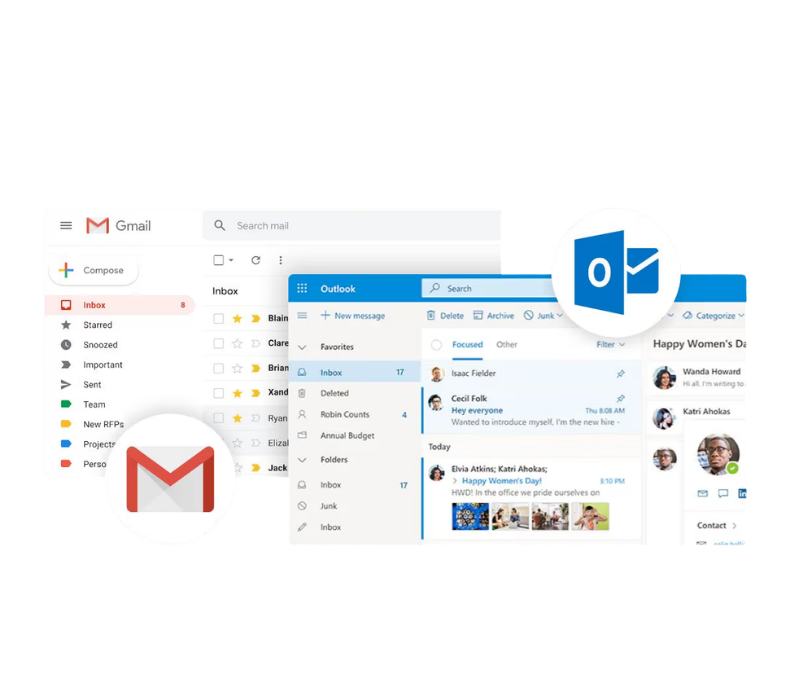
Full Microsoft 365 email deployment including Exchange, Outlook configuration and DNS authentication across all devices.

Google Workspace Email
Gmail setup, domain verification, DNS records and Outlook or Gmail client configuration for your full team.
Email Migration
POP3, IMAP, Exchange and platform-to-platform migrations — email history, contacts and calendars preserved throughout.
DNS & Spam Fix
MX, SPF, DKIM and DMARC records configured correctly so your email delivers reliably and does not land in spam.

Outlook Configuration
Outlook set up across desktops, laptops and mobile devices — Windows, Mac, iOS and Android.

Software Integration
Email integrated with QuickBooks, Sage and other business software so invoices and statements send automatically.





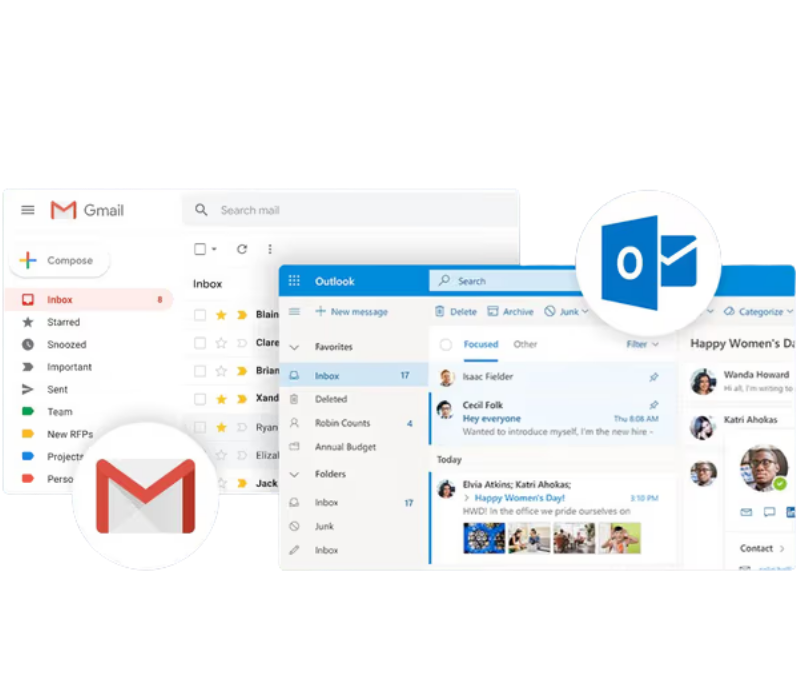
Professional Business Email Setup — Microsoft 365, Google Workspace & Hosted Email
Businesses that are still operating on a POP3 or IMAP email account through their hosting provider are running on a platform that was not designed for the demands of a modern business. POP3 accounts download email to a single device and delete it from the server — which means email accessed on a phone disappears from the desktop, shared mailboxes are impossible to manage properly, and there is no reliable backup of email history. IMAP is an improvement, but hosted IMAP accounts through a web hosting provider still lack the reliability, storage, administration, and security features that a business email environment requires.
New Perspective Design sets up professional business email for businesses in East London and across South Africa on the platforms that are built for business use — Microsoft 365, Google Workspace, or a managed Exchange environment depending on your requirements. Setup covers domain verification, DNS record configuration including MX, SPF, DKIM, and DMARC, user account creation, mailbox configuration, shared mailboxes and distribution groups where required, and Outlook or Gmail client configuration across all your team’s devices. Every setup is tested before handover to confirm email flow is working correctly and authentication records are passing.
For businesses that need professional email without the full Microsoft 365 or Google Workspace suite, we also set up and configure managed hosted email environments that provide Exchange-based reliability without the broader platform costs.
Email Migration — POP3, IMAP, Exchange and Platform-to-Platform Migrations
Email migration is where most business email transitions go wrong when they are attempted without proper planning. The most common failures are emails lost in transit when DNS records are switched before the migration is complete, mailboxes that are partially synced because the migration was not verified before the old platform was decommissioned, and calendar or contact data that did not transfer and now exists only on the old server that has already been shut down.
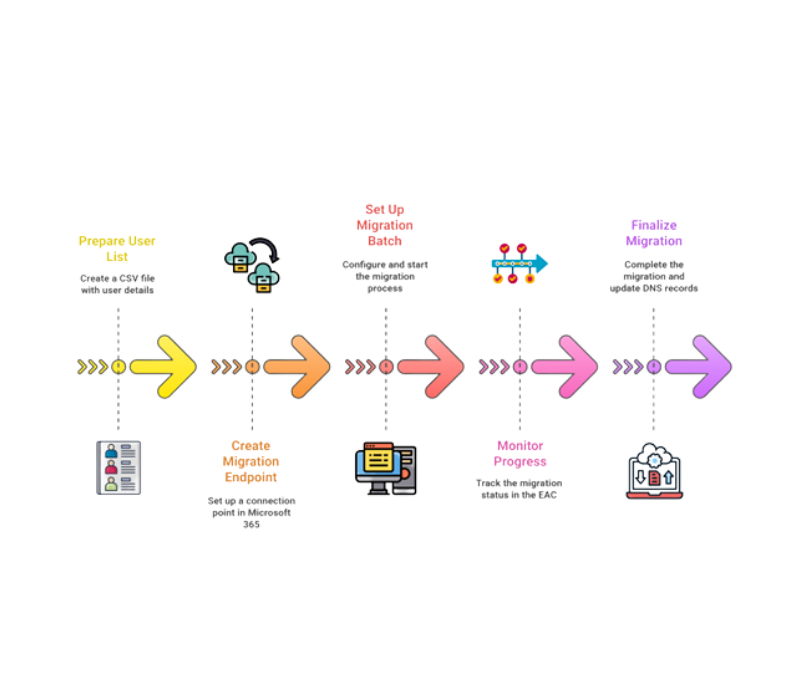
We manage the complete email migration process for businesses in East London and across South Africa, covering moves from POP3 or IMAP hosting accounts, on-premise Exchange Server environments, Microsoft 365 tenants, Google Workspace, and other hosted email providers. Migration is planned before any work begins — mailbox sizes are audited, DNS TTL records are reduced ahead of cutover to speed up propagation, and migration batches are structured to manage load and ensure email continues to flow throughout the process.
For businesses with large mailboxes, complex shared calendar structures, or multiple users migrating simultaneously, we run a pre-migration audit to identify and resolve issues before the cutover rather than discovering them mid-migration. Email history, contacts, and calendar data are fully verified before the old platform is decommissioned. In most cases the transition is completed with zero email downtime — incoming mail continues to flow without interruption throughout.
When it comes to responsive web designers east london we are simply the best service.
responsive web design East London
When it comes to logo design east london we are simply the best service.
Outlook Configuration Across All Devices — Desktops, Laptops and Mobile
Getting email working correctly on every device your team uses is not automatic — it requires configuration that goes beyond simply entering a password into an email app. Outlook profiles on Windows and Mac need to be configured with the correct account type, server settings, and cached exchange mode settings for the environment to work reliably. Mobile devices need to be configured with the correct authentication method — modern authentication rather than basic authentication, which Microsoft has deprecated across Microsoft 365 environments. Incorrect device configuration leads to sync delays, calendar issues, contacts that do not appear, and recurring password prompts that interrupt your team throughout the working day.
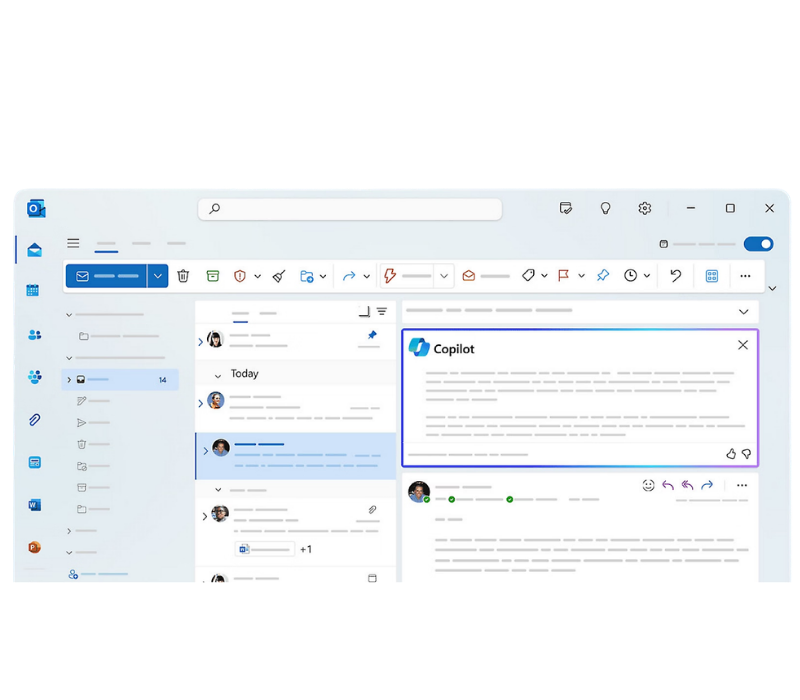
We configure Outlook across your team’s desktops, laptops, and mobile devices as part of every Microsoft 365 and hosted Exchange deployment. For businesses on Google Workspace, we configure Gmail and the Google Workspace apps on all devices — including setting up Google Drive and Calendar sync where required. For teams using Outlook as their email client on Google Workspace, we handle the specific configuration required to connect Outlook to Gmail correctly, including the OAuth authentication setup that Google requires for third-party mail clients.
Configuration is tested on every device before handover — we do not consider the job complete until every team member can send, receive, and sync their calendar correctly from every device they work on.
DNS Authentication — MX, SPF, DKIM & DMARC Configuration for Reliable Email Delivery
DNS authentication records are the technical foundation that determines whether your outgoing email is delivered to your recipient’s inbox or filtered into spam. Businesses that have set up email without correctly configuring SPF, DKIM, and DMARC records are sending email that receiving mail servers cannot verify as legitimate — which results in emails landing in spam, being silently rejected, or being used as a vector for email spoofing where attackers impersonate your domain.
SPF (Sender Policy Framework) defines which mail servers are authorised to send email on behalf of your domain. DKIM (DomainKeys Identified Mail) adds a cryptographic signature to outgoing email that receiving servers use to verify the message was not tampered with in transit. DMARC (Domain-based Message Authentication, Reporting and Conformance) tells receiving servers what to do when an email fails SPF or DKIM checks, and provides reporting so you can see who is sending email on behalf of your domain. All three records need to be correctly configured and aligned for your email to be treated as trustworthy by modern mail servers.
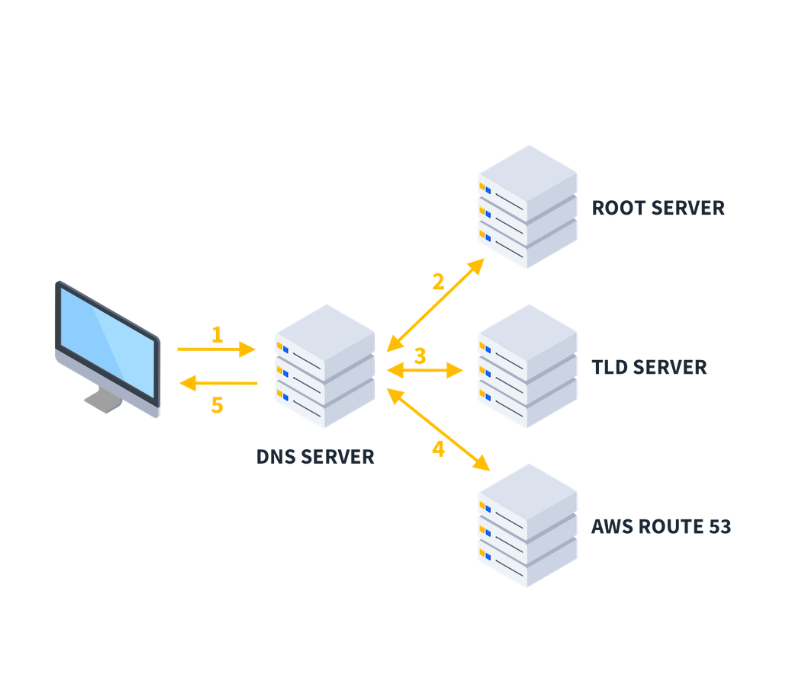
We configure MX records to route incoming email to the correct mail server, and implement SPF, DKIM, and DMARC records that match your email sending infrastructure — whether that is Microsoft 365, Google Workspace, or a combination of platforms. For businesses that send transactional email from third-party platforms such as accounting software or marketing tools, we ensure those sending sources are also covered by your DNS authentication records.
When it comes to responsive web designers east london we are simply the best service.
responsive web design East London
When it comes to logo design east london we are simply the best service.
Email Integration With QuickBooks, Sage & Business Software
Your accounting software and business systems should be able to send professional, authenticated email directly from within the platform — invoices, statements, payment reminders, and client correspondence dispatched from QuickBooks, Sage, or Xero using your business email address rather than requiring staff to download a PDF and manually attach it to an Outlook email. When this integration is not in place, invoicing becomes a manual two-step process that adds unnecessary admin time and introduces the risk of sending the wrong document to the wrong client.
We configure email integration between your accounting software and your Microsoft 365 or Google Workspace environment, including the SMTP relay settings, OAuth authentication, and DNS records required to ensure outbound system emails are delivered reliably and pass spam filters at the receiving end. For Microsoft 365 environments, we configure the Microsoft 365 SMTP relay or the connector-based send method depending on the volume and authentication requirements of your accounting platform. For Google Workspace, we configure the Gmail SMTP relay with the correct authentication credentials for your business software.
Beyond accounting software, we handle email integration for any business system that needs to send authenticated email using your domain — CRM platforms, booking systems, customer communication tools, and internal notification systems and websites.
Image suggestion: QuickBooks or Sage invoice sending interface showing email integration with a professional email address
Our Client Stories
Helping our clients suceed
 New Perspective Design | Websites | Marketing | Graphics | Branding

1 Salisbury Rd, Berea, KuGompo City
-
 Working with Juan and the team at New Perspective Design has been an outstanding … More experience from start to finish.
They took the time to understand the vision behind AgriTeb Africa and translated it into a professional, modern, and highly functional website that accurately reflects our business and long-term ambitions.
Their attention to detail, responsiveness, technical expertise, and willingness to accommodate changes throughout the development process made the entire experience seamless.
The final result exceeded expectations and has provided AgriTeb Africa with a strong digital foundation as we continue to grow.
I highly recommend New Perspective Design to any business looking for a professional web development partner.
— Tebogo Ngoepe, Founder & Managing Director, AgriTeb Africa -
Excellent service from Juan and the team. They handled the development and deployment … More of our website professionally. The site was delivered smoothly, security measures were implemented and everything was tested before going live.
I would gladly recommend their services to anyone looking for reliable website development and hosting support.
Thank you again for the great work. -
Needed an urgent logo to be designed. Aimee and team were able to understand the … More requirements only via email and had the logo finalized within 1 business day. Super efficient and reasonably priced.
-
A big thank you to Juan at New Perspective Studio for the great, friendly service. … More He made the whole process super easy for us, and we really appreciated his positive attitude and professionalism. Highly recommended.
-
New Perspective Design is a highly recommended company if you need any assistance … More with websites/marketing. They are professional and offer quick and fast services. Juan and his team designed our school's website "Wysneusie kleuterskool" which we are very proud of. They are very thorough and helpfull with step by step instructions of what is needed from the client.
-
I work since 8 years with New Perspective Design. Their Design and service is always … More excellent. Thank you.
-
I reached out to NPD looking for a clean, professional and grounding website. I was … More extremely overwhelmed due to the Vision I had, and the amount of work we needed to put into the Website.
Juan is exceptional and gifted at what he does! He listens, advises, recommends, and he has a great attention to detail!
He went over and above to deliver an absolute beautiful Website !!! And his sense of humor is EVERYTHING! We are looking forward to a long working relationship with NPD and I would definitely recommend him for Website designs.
Everything works. Paystack, Bookings, and and the Website flows seamlessly.
Working with you has been a breath of fresh air, Juan and thank you for your patience.
I will never thank you enough. 😊🙌🏾🎉
The Aura & Growth Learning Hub Website is Officially Live! -
Outstanding professionalism and exceptional technical skill. He delivered exactly … More what I envisioned with precision and clarity. Highly recommended
-
I had the pleasure of working with Aimee at New Perspective Design, and I am extremely … More impressed with the service I received. She designed my flyers and business cards with a professional and modern look that perfectly matched my business needs. Aimee was attentive, creative, and efficient throughout the process, and she ensured that I was completely satisfied with the final designs. I highly recommend New Perspective to anyone looking for quality design services and excellent customer support.
-
I had the pleasure of working with Aimee at New Perspective Design, and I am extremely … More impressed with the service I received. She designed my flyers and business cards with a professional and modern look that perfectly matched my business needs. Aimee was attentive, creative, and efficient throughout the process, and she ensured that I was completely satisfied with the final designs. I highly recommend New Perspective to anyone looking for quality design services and excellent customer support.
-
If you ever need a developer who won’t fire you for creating scope creep… speak to … More Juan from New Perspective Studio.Juan’s been helping me build my coaching website, integrate Paystack payments, connect calendars, and set up Google Ads — all while I keep changing my mind, asking for “just one more thing”, and missing my own deadlines.He keeps on showing up with patience, professionalism and a very dry sense of humour that I’ve come to appreciate almost as much as his technical skill.If you’re looking for someone who can handle the full stack and your executive functioning chaos — Juan’s your guy. Grateful for the partnership and very happy to recommend him.Cannot sing his praises enough!
-
100% impressed with their work! The team delivered a sleek, professional website … More and went above and beyond to help with every detail. Their eagerness to make everything perfect was top-notch.
-
I would most definitely recommend them. They are such an amazing company. If I had … More to put it in any way I would say it way less for way more. They are so fairly priced and you get so much!!! Definitely do business with them. Did our vertical graphics website.
-
Aimee Behrens was extremely helpful throughout the entire design process. She understood … More my requirements and the product that was delivered was beyond my expectation. I am extremely thankful and very happy with the designs. Thank you to Aimee and the NPD team for your professional service.
-
Aimee from New Perspective Design helped us with our Company Logo design and company … More stationary on more than one occasion.The designs were always exactly what we wanted! Great Service.
-
If I could, I would give 6 stars.Great final product service, and great customer … More care. Going the extra mile to meet and exceed our desires and request with the website design. Highly and gladly recommend New Perspective Design, and a special gratitude to Juan and Aimee.
-
Juan built the daisa.co.za website for me. From the start he was very professional … More and open. he kept to the time line he gave me and I never had to doubt his ability to do what I expected. After the website was built, I required minor changes and I got more than what I expected. I will recommend New Perspective Design any time to any Company that needs a website. My site is now running for four years now and I never had an issue that caused my site to broke down.Thank you Juan for grate service and especially after sales service.
-
New Perspective Design has hosted my website for a few years now, and I have received … More excellent service and outstanding results, from their suggestions and advice. They tailor make to your requirements as you grow.
-
We recently had the pleasure of working with New Perspective Design for several design … More projects, and we cannot speak highly enough of their professionalism and work ethic. From start to finish, their team demonstrated an impressive commitment to excellence, consistently delivering beyond our expectations. The end product was not only professional but also surpassed what we had envisioned. Their attention to detail and creativity truly set them apart.If you are in need of design work or a website, we wholeheartedly recommend New Perspective Design. Their dedication to quality and customer satisfaction ensures that you will receive exceptional service and a final product that stands out.
-
I recently had a website created by New Perspective, and I’m really impressed with … More their one-on-one consultation process. They took the time to sit down with me, really listen to what I wanted, and ensured the final design reflected my vision perfectly. Throughout the project, they maintained excellent communication, keeping me informed and engaged in each step of the process. I highly recommend New Perspective for anyone looking for a personalized, attentive approach to web design!


Email Setup FAQ
Business Email Setup
What is the difference between POP3, IMAP, and Exchange email?
These are three different protocols for accessing email, each with significant practical differences for a business:
- POP3 downloads email to a single device and removes it from the server. Email accessed on your phone disappears from your desktop. There is no shared mailbox, no calendar sync, and no reliable backup. It is unsuitable for any business with more than one device or more than one person accessing email.
- IMAP keeps email on the server and syncs it across multiple devices. It is an improvement over POP3 but most hosting-based IMAP accounts lack the storage, reliability, administration, and security features a business environment requires.
- Exchange is Microsoft's enterprise email protocol, used by Microsoft 365 and on-premise Exchange Server. It supports full email, calendar, contacts, and tasks sync across all devices, shared mailboxes, distribution groups, and centralised admin management. It is the standard for business email environments.
If your business is still on POP3 or hosting-based IMAP, migrating to Microsoft 365 or Google Workspace is almost always the right move. The difference in reliability and functionality is significant.
Should we use Microsoft 365 or Google Workspace for business email?
Both are excellent platforms for business email. The right choice depends on how your team works and what tools you need alongside email:
- Microsoft 365 is better suited to businesses that rely on desktop-installed Word, Excel, and Outlook, have existing Windows infrastructure, or need the more advanced security features in Microsoft 365 Business Premium.
- Google Workspace is better suited to businesses that prefer browser-based tools, real-time document collaboration in Docs and Sheets, and a simpler admin environment.
For email alone, both platforms perform equally well. The decision is usually driven by what your team needs beyond email — document creation, collaboration tools, and storage requirements.
We are platform-agnostic and work extensively with both. We advise on the right choice based on your specific requirements during a consultation.
Can you set up a shared mailbox so multiple people can access the same inbox?
Yes. Shared mailboxes — such as info@, support@, or accounts@ — are a standard part of both Microsoft 365 and Google Workspace setup. We configure shared mailboxes and set the appropriate permissions so the right team members can read, send from, and manage the shared inbox without each needing a separate paid licence for it.
In Microsoft 365, shared mailboxes do not require a separate licence for up to 50GB of storage. In Google Workspace, shared inboxes are managed through Google Groups. We configure whichever approach is appropriate for your platform and team structure.
Do you configure email on our phones and computers as part of the setup?
Yes. Device configuration across your team's desktops, laptops, and mobile devices is included as part of every email setup we do. We configure Outlook on Windows and Mac, Gmail on all platforms, and email apps on iOS and Android — and verify that email, calendar, and contacts are syncing correctly on every device before handover.
The setup is not complete until every team member can send and receive email and access their calendar from every device they work on.
Email Migration
What types of email migration do you handle?
We handle migrations from a range of source platforms to Microsoft 365 or Google Workspace, including:
- POP3 or IMAP hosting-based email accounts
- On-premise Microsoft Exchange Server
- Microsoft 365 tenant-to-tenant migrations
- Google Workspace to Microsoft 365 and vice versa
- Other hosted Exchange or legacy mail server environments
Each migration type requires a different technical approach. We select the correct migration method based on your source platform, the number of mailboxes, and your business continuity requirements — and document exactly what the process will look like before any work begins.
Will we lose any emails during the migration?
No — provided the migration is planned and executed correctly. We migrate email history, contacts, and calendar data in full before DNS records are switched over. The old platform remains active and receiving email during the migration process. Once the migration is verified as complete, DNS is cut over to the new platform and the old server continues to receive any mail that arrives during the propagation window.
We verify the migration is complete and accurate before decommissioning the old platform. For large mailboxes we run a pre-migration audit to identify any issues — such as corrupted PST files or mailboxes that exceed size limits — before they become problems during the cutover.
Email loss during migration is almost always the result of rushing the cutover before the migration is verified. We do not cut over until the data has been confirmed.
Will our email go down during the migration?
In most cases, no. The mailbox data is migrated in the background before DNS records are switched over, which means incoming email continues to arrive at the old server throughout the migration. The DNS cutover itself takes effect within minutes for most domains, and the old server continues to receive mail during the propagation window so nothing is missed.
For businesses where email continuity is business-critical, we schedule the cutover for off-peak hours and keep the old platform running for a period after the switch to catch any mail that arrives at the old server during propagation.
Can you migrate our calendar and contacts as well as email?
Yes. Email history, calendar data, and contacts are all migrated as part of the process. Calendar migration preserves appointments, recurring events, and meeting invites. Contact migration transfers your address book to the new platform so it is available across all devices immediately after the cutover.
The completeness of calendar and contact migration depends on the source platform. POP3 accounts typically store calendar data locally on a single device rather than on the server, which means calendar data may need to be exported and imported manually rather than migrated server-to-server. We identify this during the pre-migration audit and advise on the best approach.
DNS Authentication & Spam Delivery
What are SPF, DKIM and DMARC — and why do we need them?
These are DNS records that authenticate your outgoing email and tell receiving mail servers that your messages are legitimate:
- SPF (Sender Policy Framework) lists which mail servers are authorised to send email on behalf of your domain. Without it, anyone can send email pretending to be from your domain.
- DKIM (DomainKeys Identified Mail) adds a cryptographic signature to every outgoing email. Receiving servers use this signature to verify the message was not tampered with in transit and genuinely originated from an authorised source.
- DMARC (Domain-based Message Authentication, Reporting and Conformance) tells receiving servers what to do when an email fails SPF or DKIM checks — reject it, quarantine it, or allow it. It also provides reporting so you can monitor who is sending email on behalf of your domain.
All three records need to be correctly configured and aligned for your email to be treated as trustworthy by modern mail servers. Missing or misconfigured records are the most common cause of business email landing in spam.
Our emails keep landing in spam — can you fix this?
In most cases, yes. Emails landing in spam are almost always caused by missing or misconfigured SPF, DKIM, or DMARC records on your domain. We audit your current DNS records, identify what is missing or incorrect, and implement the correct authentication records for your email sending infrastructure.
If you send email from multiple sources — your main email platform, an accounting system, a CRM, or a marketing tool — each sending source needs to be covered by your SPF record. A common mistake is configuring SPF for the main email platform but not for third-party systems that also send on your behalf, which causes those emails to fail authentication and land in spam.
Email deliverability is also influenced by the content of your emails and the sending reputation of the mail server your email is routed through. DNS authentication resolves the majority of spam delivery issues but is not the only factor.
Someone is sending fake emails pretending to be from our domain — what do we do?
This is email spoofing and it is almost always preventable with a correctly configured DMARC record set to enforcement. Without a DMARC policy — or with a DMARC policy set to monitoring only rather than enforcement — receiving mail servers will still deliver spoofed emails from your domain rather than rejecting them.
We implement a DMARC policy set to quarantine or reject for your domain, which instructs receiving mail servers to block or filter emails that fail SPF and DKIM checks rather than delivering them. This stops spoofed emails from reaching your clients and contacts.
Implementing DMARC enforcement requires that your SPF and DKIM records are correctly configured first — otherwise legitimate emails from your own domain can fail authentication and be rejected. We assess this before moving to enforcement.
What is an MX record and what happens if it is wrong?
An MX (Mail Exchange) record tells the internet which mail server is responsible for receiving email on behalf of your domain. When someone sends an email to your address, the sending server looks up your MX record to know where to deliver it. If the MX record is wrong, missing, or pointing to a server that no longer exists, incoming email will fail to deliver — either bouncing back to the sender or being silently lost.
MX record problems are one of the most common causes of businesses suddenly not receiving email, particularly after a platform change or domain transfer where the DNS records were not updated correctly. We check and configure MX records as part of every email setup and migration.
Outlook & Device Configuration
Outlook keeps asking for our password — how do we fix this?
Recurring password prompts in Outlook are almost always an authentication configuration problem. The most common causes are Outlook profiles configured with basic authentication on a Microsoft 365 account that requires modern authentication, a cached credential in Windows Credential Manager that has become stale, or a multi-factor authentication prompt that Outlook is not handling correctly due to an outdated version or misconfigured account profile.
We diagnose the specific cause and resolve it — whether that is reconfiguring the Outlook profile with the correct authentication method, clearing stale cached credentials, updating Outlook to a version that supports modern authentication, or adjusting the MFA configuration in the Microsoft 365 admin centre.
Can we use Outlook with Google Workspace?
Yes. Outlook can be configured to connect to a Google Workspace Gmail account using Google's OAuth authentication. This allows teams that prefer Outlook as their email client to continue using it while running Google Workspace for email, calendar, and contacts on the server side.
The configuration requires specific steps to enable OAuth access in the Google Workspace Admin Console and configure the Outlook profile correctly — it does not work with a simple username and password setup due to Google's security requirements for third-party mail clients.
Our calendar is not syncing between Outlook and our phone — what is wrong?
Calendar sync failures between Outlook and mobile devices are usually caused by one of three things — the mobile device is configured with a different account profile than the desktop, the account on the mobile device is using IMAP rather than Exchange ActiveSync or the native Microsoft or Google account connection, or there is a sync conflict between a local calendar and the server calendar.
We diagnose and resolve calendar sync issues as part of our device configuration service — checking that all devices are connected to the same account profile using the correct protocol and that there are no conflicting local calendar entries causing duplication or sync failures.
Can you configure email on our accounting software so invoices send automatically?
Yes. We configure SMTP email integration between your accounting software — QuickBooks, Sage, or Xero — and your Microsoft 365 or Google Workspace environment. This allows invoices, statements, and payment reminders to be sent directly from within your accounting platform using your professional domain email address, rather than requiring staff to download a PDF and manually attach it to an email.
The configuration covers the SMTP relay settings, authentication credentials, and any DNS records required to ensure outbound accounting system emails are delivered reliably and pass spam filters at the receiving end. We test the integration with a real send before handover to confirm delivery is working correctly end to end.
Costs & Support
What does email setup and migration cost?
Setup and migration costs depend on the number of users, whether migration is required, the source platform, and how many devices need to be configured. A straightforward setup for two to three users with no migration is a different scope to a ten-user migration from a legacy Exchange Server with shared mailboxes, calendar data, and device configuration across the full team.
We scope and quote clearly before any work begins — so you know exactly what is included and what it will cost before committing.
Platform licence costs — Microsoft 365 or Google Workspace subscriptions — are paid directly to Microsoft or Google and are separate from our setup and migration fees. We advise on the expected platform cost as part of scoping.
Do you provide ongoing email support after the initial setup?
Yes. Once-off setup and migration is available for businesses that just need to get the job done. For businesses that want ongoing support — adding new users, troubleshooting delivery issues, managing DNS records, configuring new devices, and dealing with email problems as they arise — we offer monthly IT support retainers that cover email support alongside broader IT and Microsoft 365 or Google Workspace management.
A combined plan covering email support, IT support, and website maintenance under a single monthly fee is available for businesses that want one point of contact for their entire technical setup.
We are based outside East London — can you still help with email setup?
Yes. Email setup and migration is handled remotely for businesses across South Africa. DNS configuration, platform setup, mailbox migration, and most device configuration can be completed via remote access without a site visit. We have clients in Johannesburg, Cape Town, Pretoria, Durban, and across the Eastern Cape who we support entirely remotely.
For businesses that require on-site device configuration — typically where a large number of devices need to be set up simultaneously or where staff are not comfortable with remote access sessions — on-site visits can be arranged for East London and surrounding areas, or quoted separately for other regions.
Our email was set up by our previous IT provider — can you take it over?
Yes. We take over management of existing email environments regularly. We start with an audit of your current DNS records, email platform configuration, and device setup to understand what is in place and identify any issues before taking on ongoing support.
The main requirement is that we have admin access to your email platform and DNS management — either handed over by your previous provider or accessible to you directly. If admin access is locked with a previous provider and cannot be retrieved, we advise on the best path forward depending on your platform and domain registrar.