
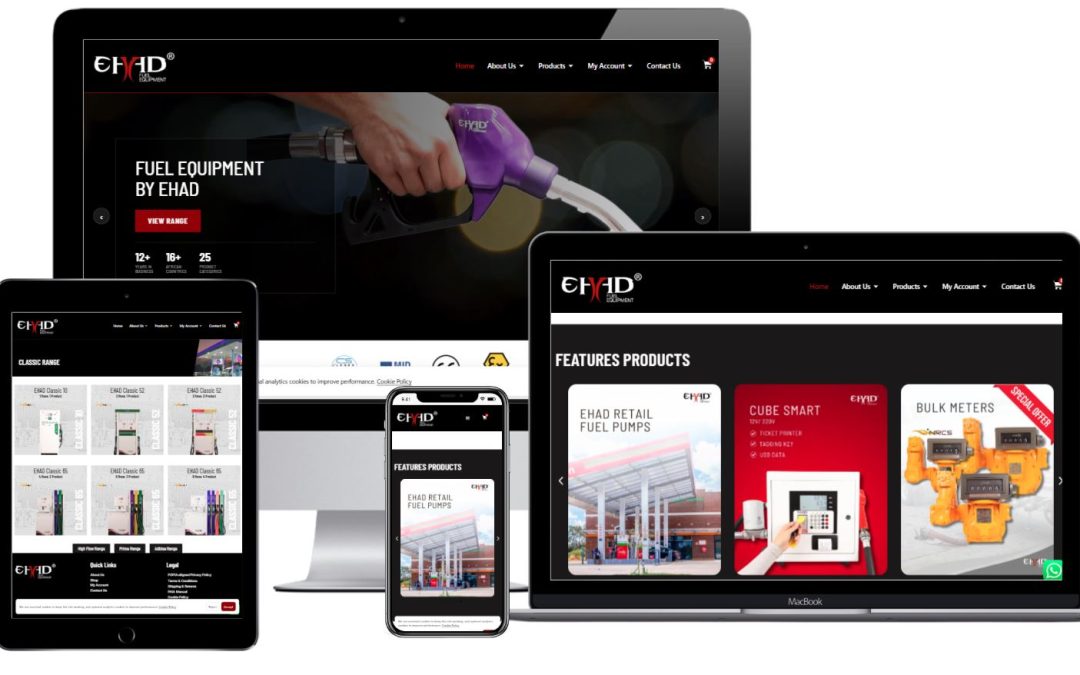
EHAD Fuel Equipment Case Study | Headless WordPress Build
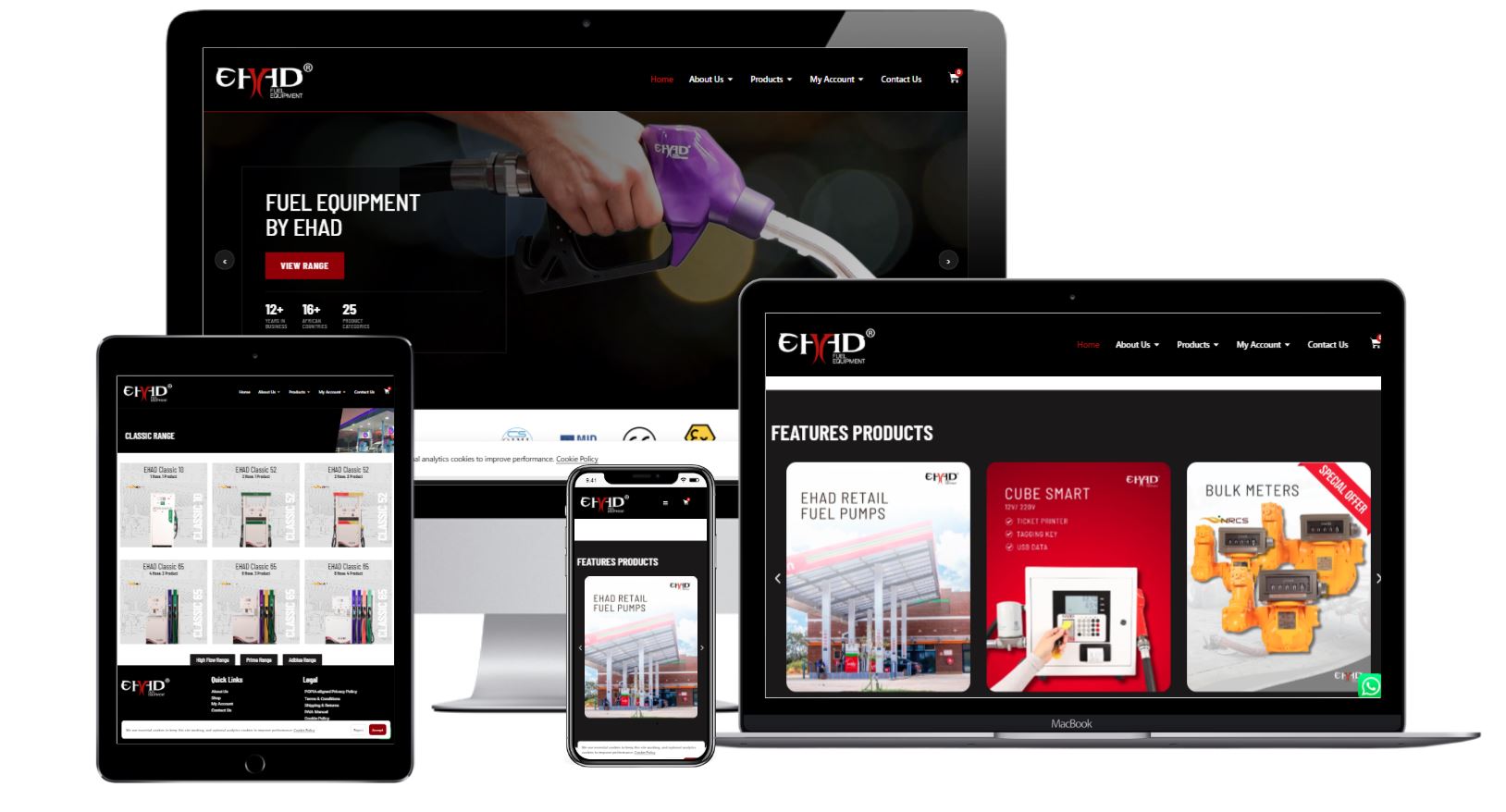
Project at a Glance
Client: EHAD Fuel Equipment, a leading fuel dispenser supplier serving South Africa, Zambia, Zimbabwe, and Mozambique.
Scope: Full website rebuild from a 2018 WordPress site to a headless WordPress and Next.js stack. Custom WooCommerce engineering. Custom shipping plugin with Courier Guy API integration and depot freight fallback. Custom wholesaler login system with tiered pricing. Technical SEO and AI search optimisation built in from day one.
Disciplines: Headless development, custom WooCommerce engineering, custom plugin development, technical SEO, AI search readiness, Cloudflare CDN deployment.
Timeline: Four months from kickoff to launch. Ongoing development and support.
Team: Juan Preuyt (lead developer and SEO), one designer, working directly with EHAD’s Jacques Schoenknecht, Natashka Koorts, and Monique van Zyl.
When Jacques Schoenknecht came back to us in early 2025, the site we’d built for EHAD Fuel Equipment in 2018 had done its job. It had served the business for seven years, quietly bringing in leads while the company grew into one of South Africa’s most recognised fuel dispenser suppliers, with clients spanning fuel stations across South Africa, Zambia, Zimbabwe, and Mozambique.
The site wasn’t broken. It was just no longer the company.
EHAD had outgrown it. They were opening a second branch in George. They were planning a booking AI system and a mobile fleet operating system. Their product range had expanded. Their reputation had hardened into something more serious, more technical, more national. And the website still looked like 2018.
So we sat down with Jacques, Natashka Koorts, and Monique van Zyl, and started planning what would become a four-month rebuild from the ground up.
The Brief, in Plain Terms
EHAD needed a website that could keep up with where the business was going, not just where it had been.
That meant four things in practice. First, the site had to handle deep technical detail across roughly 300 products, from fuel dispensers to nozzles to full station equipment, without becoming a maze. Second, it had to support a real ecommerce operation, with custom shipping logic that could handle both small couriered parcels and oversized depot freight across South Africa. Third, EHAD’s wholesale network needed proper account management with tiered pricing, not a generic checkout. Fourth, the foundation had to be future-proof. Whatever EHAD built next, the site needed to absorb it.
Standard WordPress with a page builder wasn’t going to cut it.
A Bittersweet Handover
Replacing a site you built yourself is a strange feeling.
“We were proud of what the 2018 site did for EHAD. It served them for seven years and we watched the business grow on the back of it. Pulling it down was bittersweet. But it’s not every day you get to rebuild a site for a client who’s outgrown the original in the best possible way, and that’s what made this project exciting.” — Juan Preuyt, New Perspective Studio
The 2018 build had earned its retirement. What replaced it needed to do more than look modern. It needed to carry the company forward.
Why We Went Headless
We moved EHAD to a headless WordPress stack with a Next.js frontend. This was a deliberate departure from the Divi and Elementor builds that make up most of our other client work.
Headless made sense here for three reasons.
Speed, first. A site this content-heavy, with this many product pages and this much technical specification data, runs noticeably faster on a decoupled frontend than on a traditional theme stack. Pages load in a fraction of the time. The admin stays clean. WooCommerce keeps doing what it does best on the backend, while Next.js handles everything the user actually sees.
Security, second. With EHAD’s clients including fuel station operators across multiple countries, attack surface matters. A headless setup keeps the WordPress admin separate from the public-facing site, which closes off a long list of common WordPress vulnerabilities by default.
Customisation, third. EHAD has a roadmap. Booking AI. Fleet operations integration. New product categories as the company expands. A headless stack of this website design gives us a frontend we can extend without fighting the limitations of a theme. We can build new features as proper components, plug them in, and keep moving.
This was the call that shaped everything else.
The 300-Product Problem
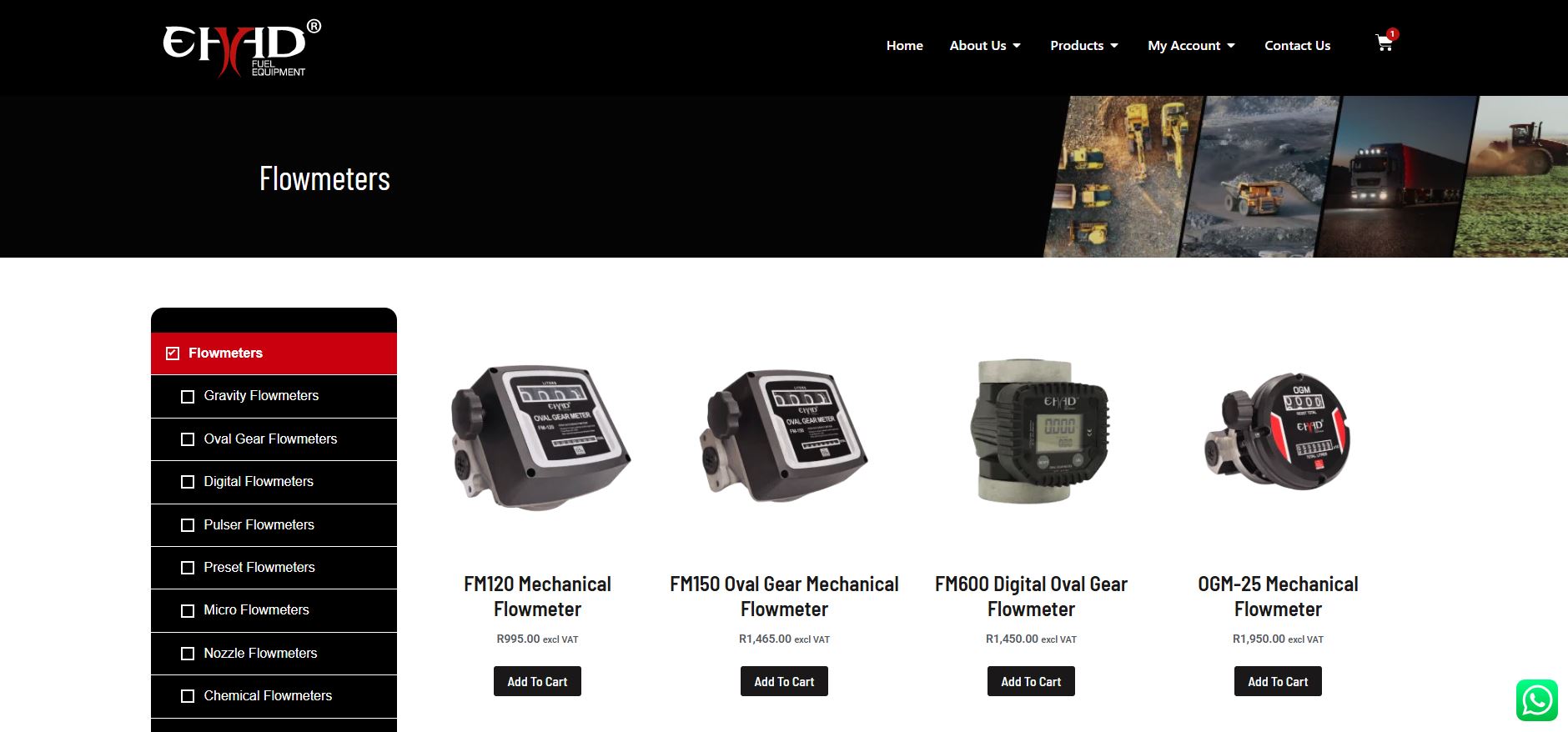
Loading 300 fuel equipment products into WooCommerce isn’t a copy-paste job. Each one has technical specifications that real buyers actually need. Flow rates. Compatibility. Certifications. Spec sheets. Datasheets.
We designed custom product templates that surface this technical detail without overwhelming the page. The information is there for the engineer who needs it, but the layout still works for someone who’s just trying to find a replacement part for their forecourt.
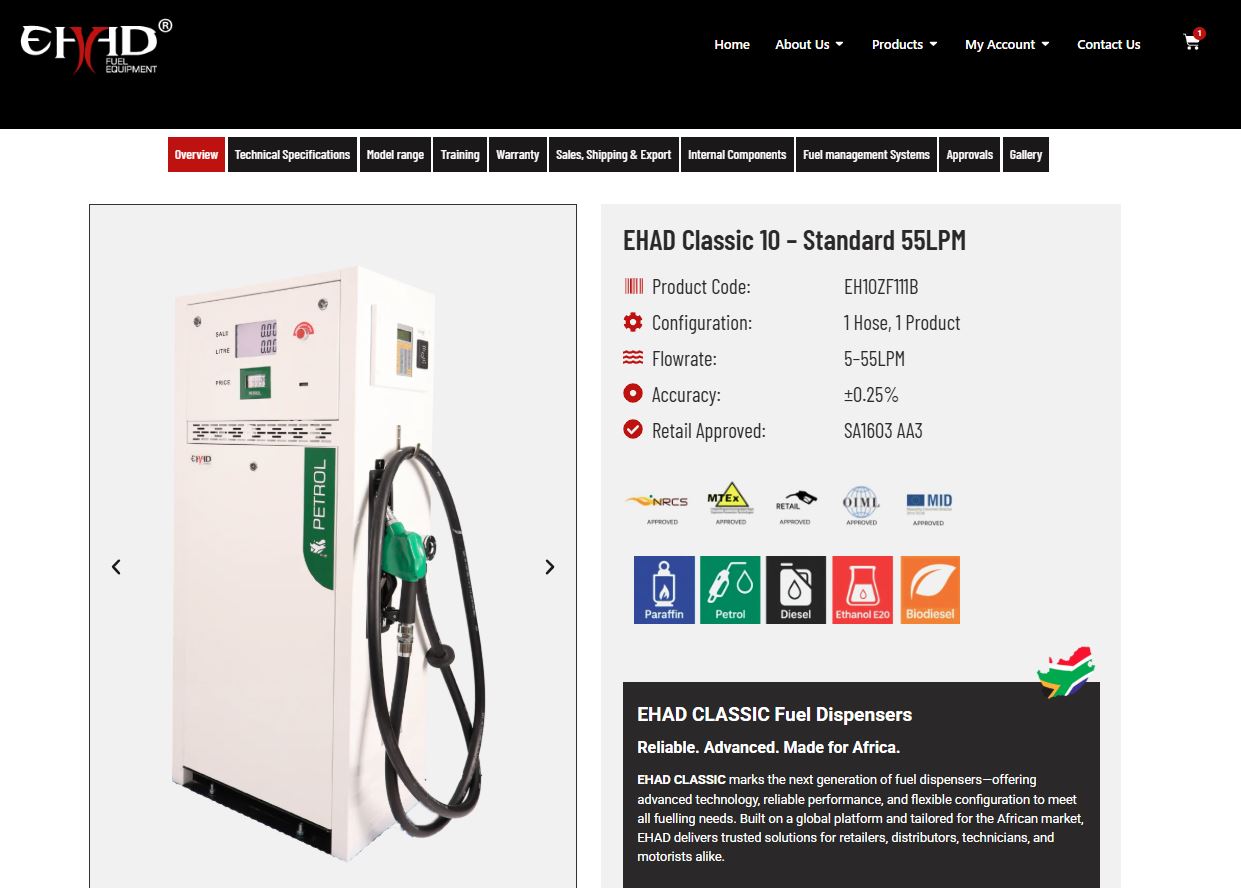
The product templates include tabbed navigation for Overview, Technical Specifications, Model Range, Training, Warranty, Internal Components, Fuel Management Systems, Approvals, and Gallery. Each tab handles a different audience. A buyer compares specs. A technician downloads training material. A procurement officer checks approvals. The same page works for all of them.
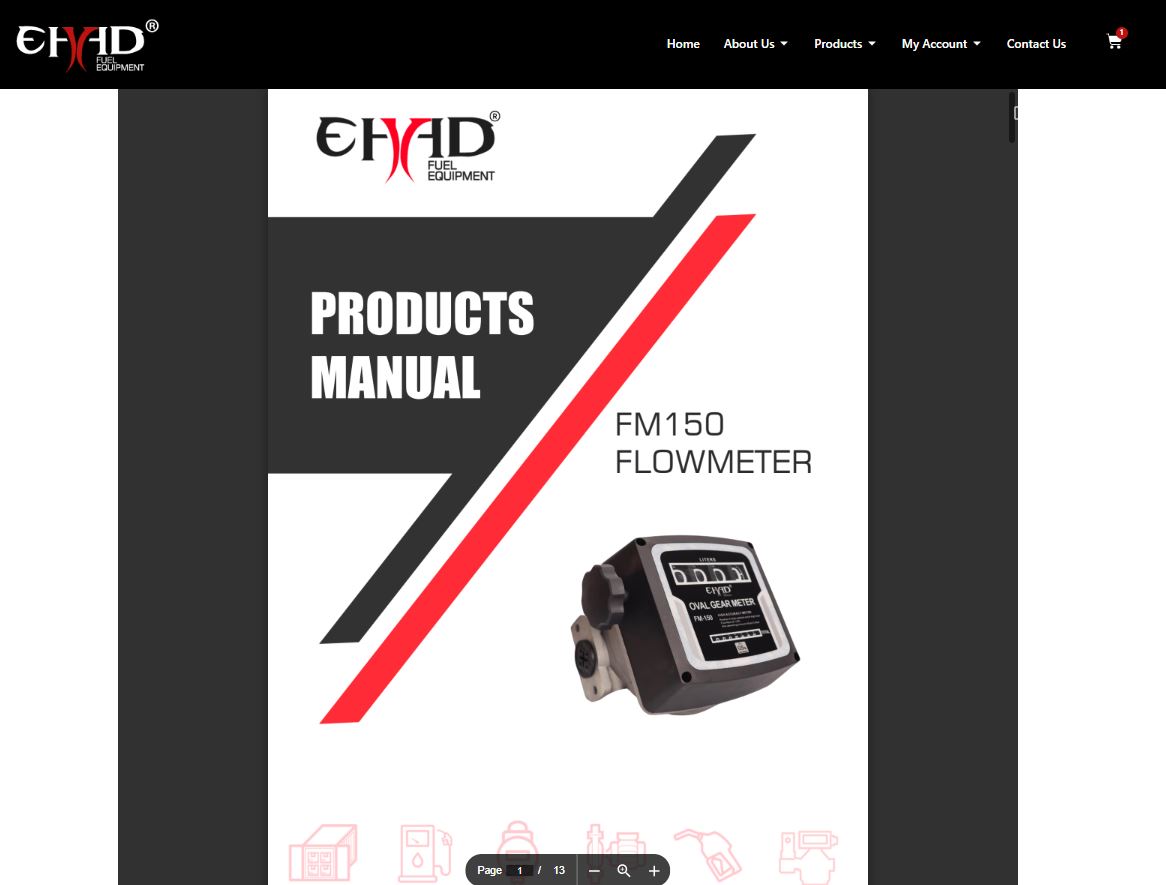
All product imagery and assets sit on Cloudflare’s CDN, which means a buyer in Lusaka loads the site nearly as fast as one in Cape Town. For a business doing real volume across the SADC region, that matters.
A Wholesale System That Actually Works Like One
EHAD doesn’t just sell to walk-in customers. A significant chunk of their business runs through wholesale relationships, with negotiated pricing that varies by client.
Standard WooCommerce doesn’t really do this well out of the box. So we built a custom wholesaler login system on top of it.
Approved wholesale accounts log in and see their own pricing across the entire catalogue. Discount tiers are set per account, which means the same product can carry different prices for different buyers, all handled automatically. Cart totals, invoices, and shipping calculations all factor the wholesale rate in correctly. Public-facing retail pricing stays separate and untouched.
For EHAD’s account managers, this replaces a lot of manual quoting work. For their wholesale clients, it means logging in and seeing the real number, not waiting for someone to email back a custom price list. The system scales as EHAD onboards new wholesale partners, without anyone needing to touch the code each time.
The Shipping Plugin Nobody Else Was Going to Build
This was the hardest part of the project, and probably the part we’re proudest of.
EHAD ships a wide range of products. Some of them fit in a courier bag. Some of them need a truck. Standard WooCommerce shipping plugins don’t really know what to do with that.
So we built our own.
The logic works in two stages. When a customer hits checkout, the plugin checks the product dimensions. If the parcel falls within Courier Guy’s accepted parameters, it pulls a live rate from the Courier Guy API. If it doesn’t, the plugin falls back to our own depot shipping system, which uses weight-based and table-rate shipping classes mapped against South African postal codes.
The customer doesn’t see any of this. They just see an accurate shipping price for whatever they’ve put in their cart. The right courier or freight method gets selected automatically based on what they’re buying and where it’s going.
This was the kind of build that needed proper engineering discipline. Edge cases everywhere. Cart updates. Multi-product orders mixing small and oversized items. Address validation. Cache behaviour. Wholesale accounts with different shipping arrangements. We worked through them all over several weeks of testing.
SEO Built Into the Foundation
The technical SEO layer went in alongside the build, not bolted on afterwards. Product schema. Organization schema. FAQ schema. Clean URL structure. Proper heading hierarchy. Optimised images with descriptive filenames and alt text. Internal linking that actually maps to how a buyer thinks about EHAD’s product range.
We’re also positioning the content for AI search. As more buyers use AI tools to research suppliers, having content structured in a way that AI models can actually parse and cite becomes a real competitive advantage. EHAD is set up for that shift.
What Two Weeks Looks Like
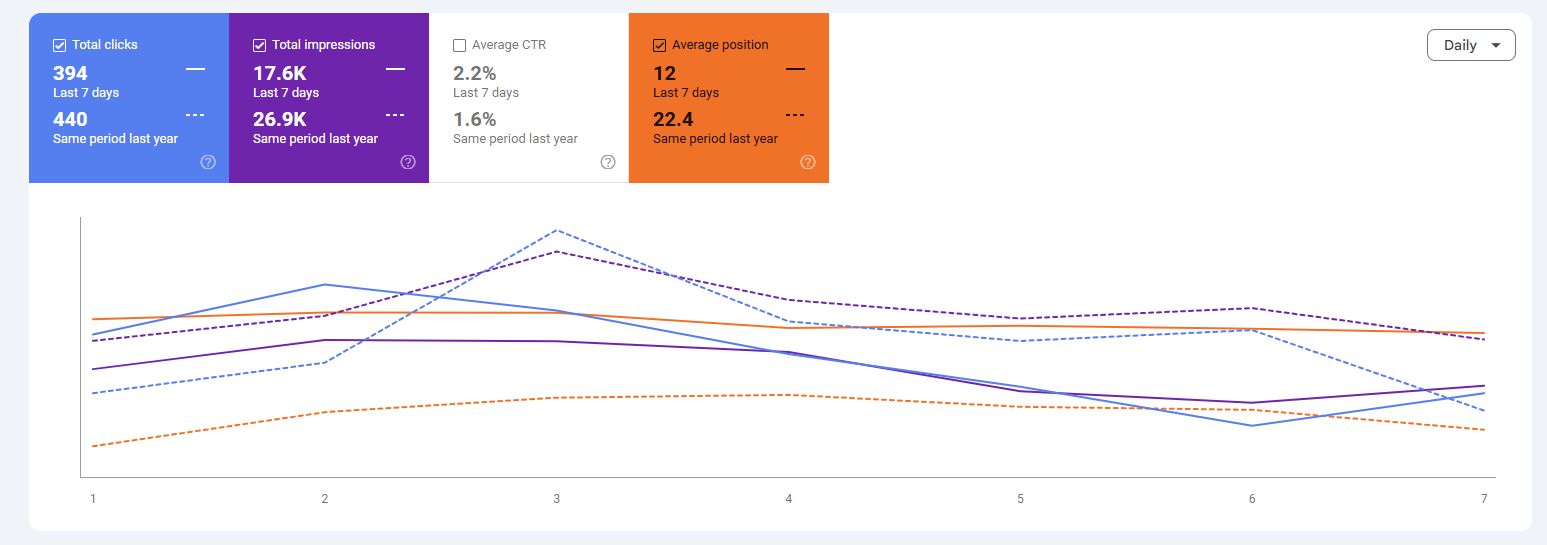
The new site went live two weeks before this case study was written. That’s nothing in SEO terms. Google is still reindexing the entire site, and a full crawl of a content-heavy ecommerce build takes weeks to settle.
But the early signals are sharper than we expected this fast.
Compared to the same period last year:
- Clicks are up from 440 to 558, roughly a 27% increase
- Average CTR has climbed from 1.6% to 2.2%
- Average ranking position has improved from 22.4 to 12, a jump of more than ten positions
- Impressions are down from 26.9K to 17.6K
That last one needs explanation, because it’s the most interesting number on the dashboard.
Fewer impressions but more clicks, better rankings, and a higher CTR means the site is now showing up for searches that actually matter. The old site was casting a wide net and catching low-intent traffic. The new site is ranking properly for the queries EHAD’s real customers are typing in. That’s a healthier position to be in, and it’s the foundation that paid traffic and continued SEO work will build on.
We’re supplementing the rebuild with Google Ads spend while the organic side stabilises, and we expect the gap to widen as schema fully indexes and Google works through the new site structure.
Where This Goes Next
The site is live, but the work isn’t finished. EHAD is in active development with us on the booking AI integration and the mobile fleet operating system. The headless stack means we can build those into the same site without compromise, instead of bolting them on as separate tools.
For us, this project is a proof point for something we’ve been saying for a while. Most South African web design agencies stop at WordPress and a page builder. There’s a real ceiling on what you can do that way, and businesses growing into national or continental operations hit that ceiling fast.
EHAD needed an agency that could do both halves of the job. The technical build, headless WordPress, Next.js, custom plugin development, custom wholesale logic, custom shipping engineering. And the SEO architecture, schema, structured data, AI-readable content, and proper search positioning baked in from the foundation up.
Most agencies in South Africa do one or the other. A development shop that doesn’t understand SEO. An SEO agency that outsources the build. The result is usually a site that looks fine but doesn’t perform, or performs in search but breaks under real ecommerce load.
That gap is where we work. New Perspective Studio handles the technical build and the SEO as one job, because they are one job. A site that ranks but can’t process a wholesale order is useless. A site that processes orders beautifully but never gets found is just as useless. EHAD needed both, and that’s what we delivered.
The 2018 site lasted seven years and helped grow the company. The 2025 build is designed to do the same for the next decade.

Written By: Juan Preuyt
Musubi Case Study: Custom WooCommerce Build | NPD
Musubi came to us with an idea and no website. Two months later they were live with 500 products, a points programme we wrote ourselves, and all three Core Web Vitals passing. Here is why we built the code instead of buying ...
MOBIOPLUS Redesign: 35% More Traffic | 2026 Case Study
See how our web design Pretoria team rebuilt MOBIOPLUS on clean custom HTML, split it into MO Agri and MO Health, and lifted traffic 35% in two ...
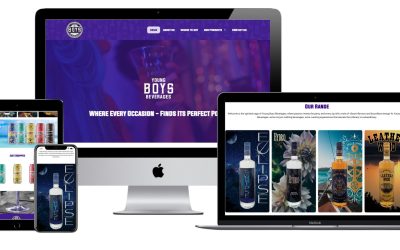
Case Study: Scalable Multi-Brand WordPress Website for Young Boys Beverages Johannesburg
A deep-dive case study on how New Perspective Design engineered a scalable multi-brand WordPress website for Young Boys Beverages in Johannesburg — balancing heavy graphic design, multiple font systems, technical SEO, UX, and performance-first ...
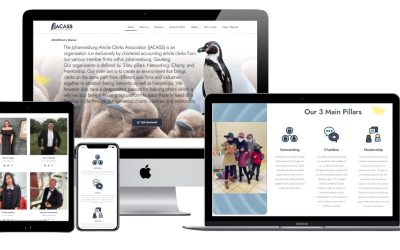
Custom WordPress Ticketing System build for JACASS Johannesburg
How New Perspective Design engineered a secure member-only ticketing system for JACASS in Johannesburg with domain restrictions, Paystack integration, encrypted verification and QR PDF ...

Case Study: Custom WordPress Membership Platform for TRE for Africa
A deep-dive into how we built a custom WordPress membership, search, and events platform for TRE for Africa using server-side architecture and ...

Case Study: Wysnuesie Kleuterskool Franchise Website Design & SEO | New Perspective Design
WordPress website and SEO case study for Wysnuesie Kleuterskool, a preschool franchise in Pretoria and Johannesburg, showing measurable organic traffic ...

Case Study: Dr HR Schneider Website Redesign | 300% Traffic Growth
See how New Perspective Design rebuilt Dr HR Schneider’s website from Wix to WordPress, improving site structure, usability, and SEO — resulting in a 300% increase in organic traffic and major ranking gains in ...

Case Study: How New Perspective Design Re-Engineered Buzz Movers’ Digital Acquisition System
Discover how New Perspective Design re-engineered Buzz Movers’ Google Ads, landing pages and Zoho CRM integration to drive over 1,600 monthly ...
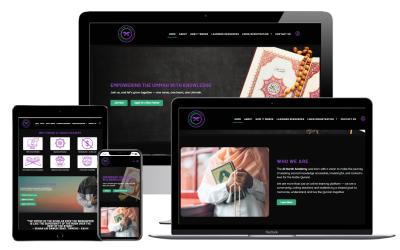
Case Study: How New Perspective Design Engineered the Al Nurah Qur’an Academy Platform
The Al Nurah Qur’an Academy platform is one of the most technically specialised systems we’ve engineered at New Perspective Design. Rather than relying on a pre-built LMS, we architected a custom scheduling and mentoring engine from the ground up — including timezone-normalised weekly class logic, ...
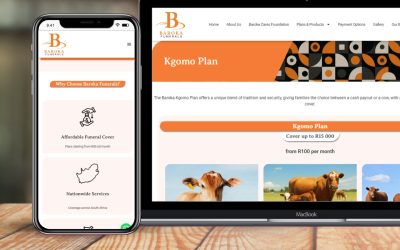
Case Study: Baroka Funerals — Website Redesign Cse Study
When Baroka Funerals, a trusted national funeral brand based in Johannesburg, approached New Perspective Design, their goal was clear — to create a website that matched the strength of their brand and simplified how South Africans engage with their services online. See how we made their conversions rose by ...